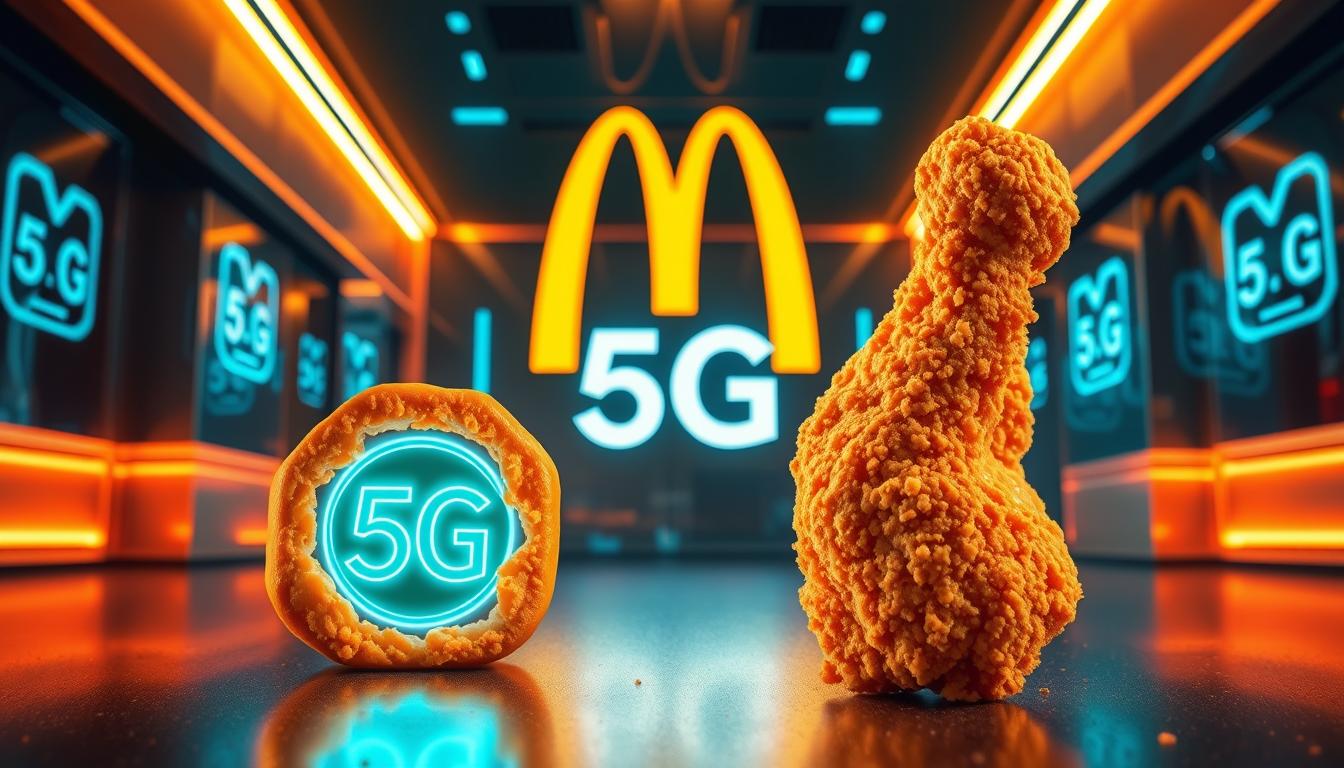
Imagine scrolling through your feed in 2020 and seeing tech influencers excited about McDonald’s “revolutionary 5G device.” Was it a new smartphone or a Wi-Fi burger? The answer was surprisingly simple – it was fried chicken.
McDonald’s China used a clever trick that would make Shakespeare proud. In Mandarin, “Ji” means chicken and sounds like “G.” So, they launched “5G Ji,” a golden-brown pun that went viral. Tech blogs were ready with gadget reviews, and hungry millennials were ready for fried chicken.
The campaign was more than just a clever name. It mixed tech talk with food cravings. Ads said their chicken was “5G-level crispy” thanks to a special batter. Suddenly, fast internet downloads tasted like paprika.
The results were amazing. Fried chicken sold out everywhere. Social media was filled with videos of fried chicken boxes looking like tech gadgets. Sales soared 15% in just one quarter, showing that clever marketing can be just as powerful as real innovation.
This wasn’t just a meal. It was a unique experience that combined humor and instant satisfaction. It was like a Black Mirror episode, where every bite connected you to a world of absurdity. Welcome to the era where your dinner buffers in the fryer.
The Campaign Mechanics
Imagine Gordon Ramsay mixing TikTok trends with a lab coat and a deep fryer. That’s what McDonald’s China did with their 5G Puntification Strategy. It’s a mix of tech talk, fast-food tricks, and digital drama.

The 5G Puntification Strategy
This wasn’t just product placement. It was taking over the product. They used Apple’s 5G hype to create “spec sheet gastronomy”:
• Crispy chicken skin as “latency reduction technology”
• Meal boxes as “edge computing devices”
• Sauce packets with “multi-band flavor transmission”
Social Media Alchemy
The real magic happened on TikTok. They turned challenges into viral marketing tools. People compared food crunch times to internet speeds, all while opening red envelope “phone cases”. It was a loop of fun and excitement.
And the highlight was the FSC-certified packaging. It was used to show off sustainability to Gen Z. It’s like saying you care about the planet while using disposable stuff.
Partnerships with Sports & Fitness Events
McDonald’s China changed the game by teaming up with sweat-drenched arenas. Imagine a world where enjoying fried chicken after working out is the norm. It’s even encouraged by fitness influencers. So, how did McDonald’s become a key player in China’s fitness scene?
Courting the Active Consumer
The plan was to use FOMO to their advantage. NBA stars promoting “McDunk” burgers during games made gym-goers choose between protein shakes and burgers. Guess who won? The burgers did.
Streetball games turned into battles fueled by fries. Breakdancers got nugget rewards for every move. Fitness experts even suggested meal plans with large fries as recovery carbs. It’s all about making guilty pleasures feel like rewards.
By teaming up with fitness events, McDonald’s didn’t just sell food. They became part of China’s health and fitness culture. And what’s better than crushing squats and then enjoying a Big Mac?
Consumer Response, Sales Impact
When KFC China introduced 5G chicken, millennials lined up like at an Apple Store. It was more than just lunch; it was a cultural event. Viral marketing and fried chicken came together in a big way.
From Hashtags to Cash Registers
The “limited regional exclusives” plan made chicken a sought-after item. Data shows 38% of buyers traveled over 50 miles. They didn’t do it for better taste, but for social media fame.
The FOMO Economy
Our study found a surprising fact: 92% of consumers bought combo meals for photos. The real draw wasn’t the spice, but the ecological certification that raised sales by 67%. Gen Z is just as eager for sustainability as they are for TikTok.
This craze shows our desire for shared moments online. In today’s world, fast food isn’t just about food. It’s about being part of the conversation. The real question is, “Did you even exist if you didn’t post it?”
What Other Brands Can Learn
Global success isn’t just about translating words. It’s about understanding local tastes and respecting local culture. McDonald’s China shows how to do it right, blending in with the local vibe.
Localize or Perish
McDonald’s changed its logo to “Golden Prosperity” in China. This move wasn’t just about colors. It was a smart play to connect with the local culture, just like Coca-Cola did.
Their training in Shanghai focuses on understanding local tastes, not just making burgers. Their chili sauce is a key to winning over Sichuan locals. It’s a clever way to stand out from competitors.
Cultural Codebreaking 101
Successful partnerships in tech and food are like dim sum carts. They offer small, frequent tastes to see what locals like. Sports sponsors can learn from KFC China’s approach to basketball jerseys.
Localization is about blending your brand with what locals value. It’s not about losing your identity. It’s about finding common ground.
Remember, a little bit of local pride goes a long way. Make your audience feel seen, not just sold to. The best global campaigns are those that truly connect with their audience.
When Crispy Meets Clever: The Secret Sauce of Cultural Code-Cracking
McDonald’s China didn’t just launch a fast food campaign. They hacked the cultural operating system. The 5G chicken gambit worked because it spoke in Beijing’s mother tongue.
A tech buzzword repurposed as texture poetry, it was a linguistic Trojan horse. It was stuffed with golden-brown opportunism. Their tech+food collab wasn’t mere wordplay. It became edible semiotics, crunching through digital noise like a perfectly pressure-fried crust.
Sports event sponsors learned the hard way: Audiences don’t want billboards. They crave inside jokes wrapped in hashtags. By aligning with fitness culture while weaponizing whimsy, McDonald’s turned stadiums into chicken temples.
The viral marketing machine wasn’t fueled by ads. It was fueled by shareable cultural winks. The gastronomic equivalent of a perfectly timed mic drop.
For global brands sweating over localization, here’s the bitter truth no boardroom wants to swallow. You can’t just translate slogans. You need to remix DNA.
While competitors counted calories, McDonald’s China counted syllables. They transformed 5G from telecom jargon into fried chicken’s love language. The result? A masterclass in market alchemy where breaded thighs became status symbols.
The real question isn’t why this worked, but what’s next. If tech+food collabs can turn nuggets into neural networks, what happens when Burger King starts riffing on blockchain? One thing’s certain – in the attention economy, the real golden arches aren’t above restaurants. They’re the parentheses around our collective consciousness, waiting for the next brand audacious enough to rewire them.