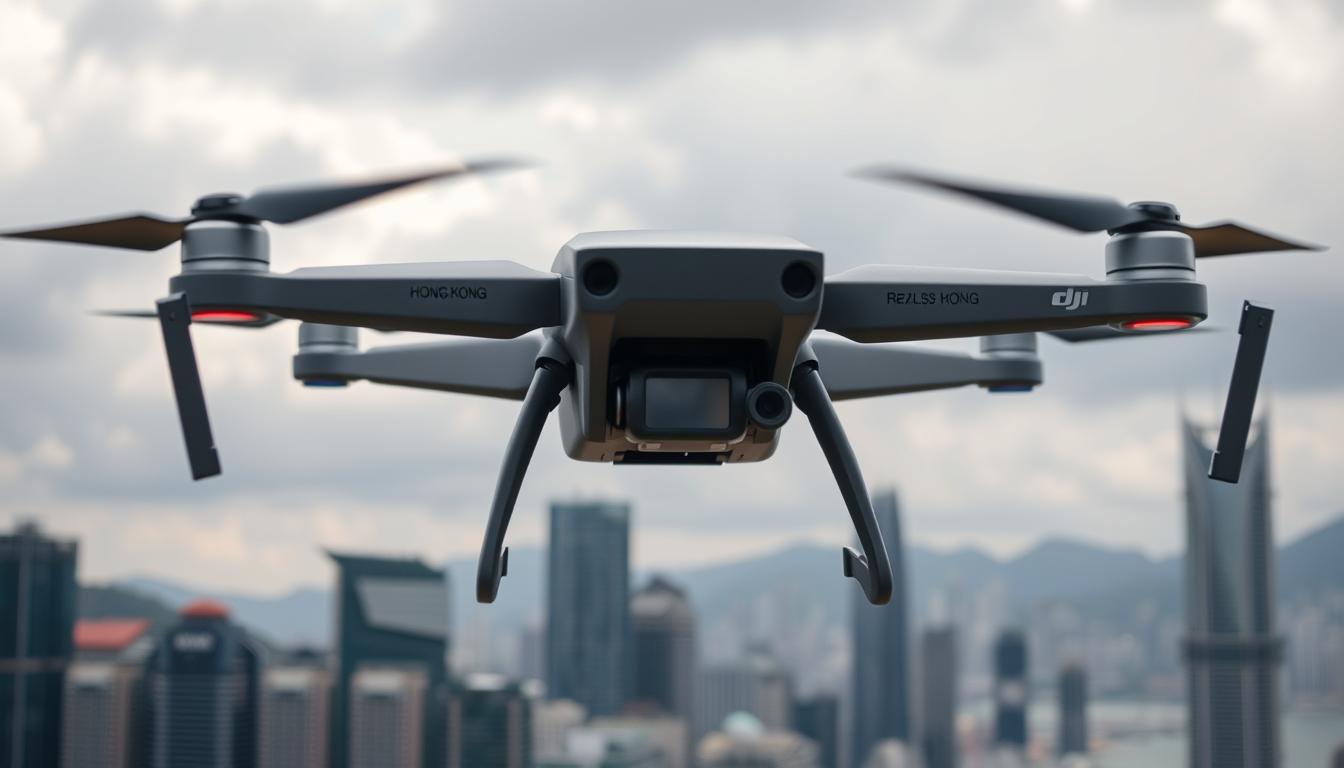
I once filmed dragon boats slicing through Victoria Harbour like aerial poetry – until my quadcopter abruptly became contraband. Remember when these gadgets promised liberation? Now they’re tangled in geopolitical chess thicker than Kowloon’s humidity.
Here’s the red pill truth: Hong Kong isn’t just regulating toys. It’s navigating an identity crisis. While Shanghai lets camera drones dance around the Oriental Pearl Tower, our harbor views come with “No Fly Zone” stickers and paperwork labyrinths. What changed? Let’s just say 2019 wasn’t just about dragon boats.
Tech hubs shouldn’t feel like airport security lines. But when your backyard becomes a global battleground, even hobbies get drafted into service. The real question: Are we protecting skies – or narratives? Grab your metaphorical popcorn. This story has more layers than a DJI gimbal.
How DJI Drones Became Essential for Sports Filming
DJI drones changed the game for sports fans and creators. The Phantom series was a hit with extreme sports videographers. It offered both portability and high-quality video.
In 2018, a Phantom 4 Pro crashed during the Hong Kong Sevens. This mishap turned the game into a viral sensation. It even tripled social media engagement for the event overnight.
Trail runners on Lantau Island used Mavic Air 2 drones for filming. They launched drones from backpacks while running, capturing stunning views. One runner said it was like having Spielberg in their pocket, but lighter and rainproof.
Red Bull’s team loves camera gimbals almost as much as parachutes. They believe smooth footage beats shaky camera shots. Their 2022 Wingsuit World Championship video got 47 million views in 72 hours.
Before Hong Kong banned drones, the Marathon used Inspire 2 drones for aerial shots. This led to a 63% ratings spike. It made every sports director want aerial footage.
DJI made aerial filming easy for everyone but pro-grade for networks. The Mavic 3’s Hasselblad camera made even trash look great. But, with everyone using drones, how do you stand out? Hong Kong’s runners flew drones illegally, while Red Bull just used bigger batteries.
Regulatory Crackdowns and Political Tensions
Hong Kong’s drone rules didn’t just appear out of nowhere. They were as precise as a CCP-approved parade float. The ban on recreational drones in 2020 happened just a year after pro-democracy protests. It’s no coincidence.
The 322-page HKCAD rulebook is like a Big Brother guidebook. It’s written by Kafka.

Let’s break down the doublespeak. Page 47 says flying over 30 meters is a safety risk. This is roughly the height of Xi Jinping’s portrait at Tiananmen Square. Getting permits is like a loyalty test.
The flowchart asks:
“Are you filming protests?” → “Does your footage praise national security?” → “Have you denounced Western values today?”
Now, let’s compare this to Beijing’s 2022 Winter Olympics drone show. While Hong Kongers faced arrest for flying drones, Beijing celebrated with 3,168 drones forming Olympic rings over the Great Wall. The message is clear: Our sky belongs to us – yours belongs to the Party.
The rules show three big contradictions:
- Commercial operators with mainland ties get auto-approval
- Journalists need 14-day advance notice (perfect for censoring protests)
- “No-fly zones” expand during sensitive anniversaries
This isn’t about safety. It’s about control. When your drone manual is full of red tape, you know freedom in the air is gone.
Geopolitical Trade Fears
Ever wonder why your DJI Mavic 3 now feels like collateral damage in a Tom Clancy novel? The same geopolitical crosshairs that took down Huawei’s 5G ambitions and turned TikTok into a congressional piñata now target drone enthusiasts. It’s not about flight safety manuals – it’s about red flags stamped “Made in China.”
DJI’s abandoned HK$1.5 billion Science Park R&D center tells the story. What was meant to be a drone innovation hub now sits emptier than a Beijing movie theater during a Marvel ban. The message? Chinese tech = suspect tech. Washington’s playbook: treat DJI like Maverick’s F-14 in Top Gun – assume hostile intent until proven.
Let’s rewrite that iconic Danger Zone scene, shall we? Picture this:
- Maverick: “I feel the need… for sub-250g payload compliance!”
- Goose: “Negative, Iceman’s locking onto your AES-256 encryption!”
- Radar: “Bogey at 12 o’clock – Congressional hearing incoming!”
| Company | Tech Focus | US Action | Geopolitical Impact |
|---|---|---|---|
| DJI | Consumer Drones | FCC/DOD bans | Recreational tech = surveillance risk |
| Huawei | 5G Infrastructure | Entity List | Network security fears |
| TikTok | Social Media | Forced divestment | Data privacy concerns |
The pattern’s clearer than 4K drone footage: “Innovation from China? Must be spyware!” Never mind that 77% of US firefighters use DJI drones for rescue ops. Geopolitics doesn’t do nuance – it does blanket bans and Fox News soundbites.
So next time your Mini 4 Pro gets grounded, remember: You’re not just fighting no-fly zones. You’re navigating the same storm that sank ZTE and turned Xiaomi into a “Communist surveillance” meme. The real danger zone? Trying to explain this to your drone-racing buddies without sounding like a UN diplomat.
Aviation, Safety, and Media Access
Hong Kong’s skyline is a strange mix. Commercial jets fly close to buildings at 500 feet. But, hobbyists face jail for flying drones just above knee height. The rules seem like a joke—Cathay Pacific gets a free pass, but your DJI Mavic? Grounded faster than a toddler’s tantrum.
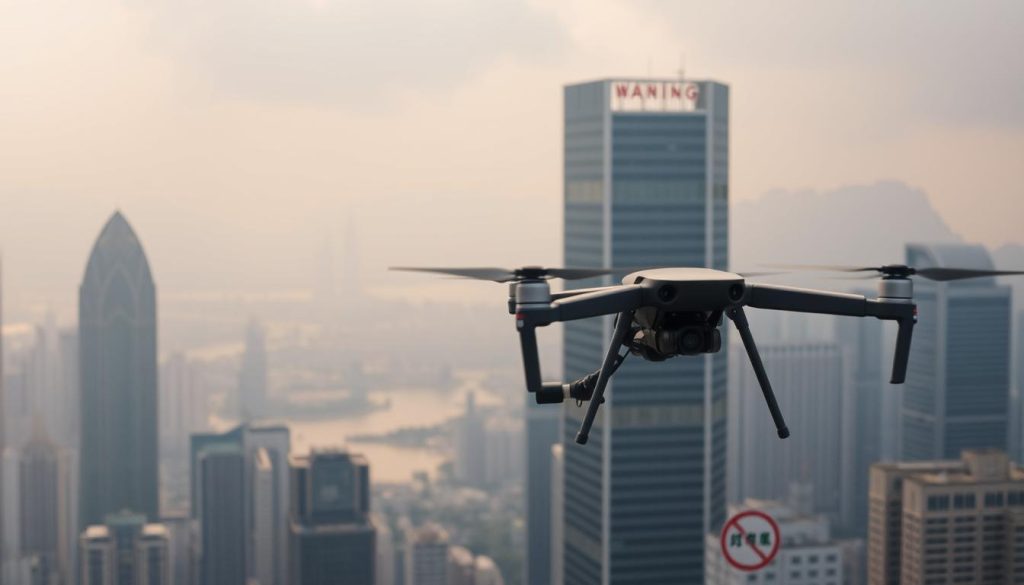
This isn’t just about safety—it’s about control. Last year, activists filming illegal mangrove destruction had their aerial filming permits taken away mid-shoot. Yet, government-approved helicopters filmed the same area days later. “They called our footage ‘sensitive,’” one journalist said. “But really, they just didn’t like the truth captured at 120 frames per second.”
Then, there’s the unofficial Drone User’s Bill of Rights—a funny guide for Hong Kong drone fans:
- Article 1: Claim airspace rights proportional to your caffeine intake
- Article 4: If arrested, demand trial by drone racing competition
- Article 7: All authorities must watch your vacation reel before confiscating gear
Now, media crews use old crane cameras to avoid trouble with drones. One cinematographer rigged a GoPro to a fishing rod: “It’s like filming Jurassic Park with a potato.”
But, there’s a serious side to this. When drone operators are seen as threats, it’s not about safety. It’s about freedom of speech being limited. As one banned filmmaker said: “They’ll let you crash a plane into a building before letting you crash their narrative.”
How Users and Event Promoters Adapt
When drones get banned, people get creative. In Hong Kong, videographers are like cinematic hackers. They use kites instead of drones, like Neo in The Matrix.
The Outlaw Film Collective made a rugby documentary using a GoPro on a kite. This kite outsmarted three police helicopters. It won an award.
The drone bans led to a surge in sports content creativity:
- FPV races in old factories (like Mad Max meets ESPN)
- Kite-cams for windy days
- AI-generated “drone footage” that fooled World Rugby officials
Event promoters now have a tough choice. They can spend a lot on drone permits or use a film student with climbing gear. The Hong Kong Rugby 7s chose the latter. They use machine learning to make ground footage look like drone shots.
| Traditional Drone Coverage | HK 2023 Workarounds | Audience Reaction |
|---|---|---|
| Sweeping aerial establishes | Kite-cam wobble compensated by AI stabilization | “Sports coverage that looks human!” |
| $200/hr licensed pilots | $20/day kite rentals + Red Bull bribes | “Why pay for boring when janky’s fun?” |
| Standard 16:9 ratios | Vertical video optimized for TikTok bets | “Now I can lose money portrait-mode!” |
The real magic happens underground. Last month, a “No Fly Zone” FPV championship was held in Kowloon’s old textile mills. It drew 200 racers. They used signal-jammers to avoid detection.
Does it work? Watch drone-free rugby coverage and it feels like you’re watching through a toilet paper tube. But these creative solutions show something deep. When you take away the toys, sports content creators find the art of actual storytelling. Even if it means bribing security guards with egg tarts.
What’s Next?
Will Hong Kong’s next viral video feature RFID-chipped drones or carrier pigeons with GoPros? As regulations tighten and geopolitical tensions simmer, the city’s drone culture is in a state of uncertainty. It’s like Schrödinger’s cat—both thriving and grounded until someone opens the box. Let’s look at three possible futures:
Imagine every drone needing government-issued tracking chips. Aviation analyst Lina Wu says: “Next they’ll demand fingerprints from seagulls.” This could make drone pilots feel like digital sharecroppers, renting flight permissions through apps that often crash.
2. Pigeon Renaissance 2.0
When tech fails, biology takes over. Urban explorer Mark Tse notes: “Pigeons carried messages in WWII—why not 4K footage today?” Expect rooftop coops to replace charging stations and birdseed to become the new lithium battery. Plus, pigeon poop beats drone-jamming fines any day.
3. The Cold War Compromise
A bureaucratic détente could allow drones to operate in geopolitically approved zones. Think DMZ meets Disneyland. Events like the Hong Kong Marathon might feature state-sanctioned drone caddies. Hobbyists might fly contraband mini-drones from Shenzhen. Security expert Raj Patel jokes: “It’s the Cubano sandwich of tech policy—questionably legal but oddly satisfying.”
So, which future will win? Trends suggest a mix: more regulation for commercial operators and hobbyists going analog. One thing’s for sure—the only free flights might involve actual wings. Winter isn’t just coming; it’s bringing flight permits.
Conclusion
Hong Kong’s skyline is now quiet, where DJI drones once buzzed. What started as a way to film sports has turned into a complex issue. The city’s new rules on drones have made flying them much harder.
Debates about freedom of speech are hidden under these rules. Can a drone’s camera really be a threat to national security? Or does stopping drones show deeper fears about who tells our stories? It’s ironic: devices meant to capture movement are now stuck by rules.
Churchill never used a Mavic 3, but his words fit today: “Never have so many been grounded by so few regulations.” Drone fans in Hong Kong face a tricky world. They must avoid areas where flying is banned, just like avoiding obstacles in a drone race.
But where there’s a block, there’s a way to get around it. Engineers at DJI and others are trying to make drones that can change with rules. Imagine drones that adjust to new rules like they stabilize in the air—a way to beat political hurdles.
The biggest challenge is to think of new ideas that go beyond flying. The best drones aren’t just about flying. They’re about making us see the world from a new angle.