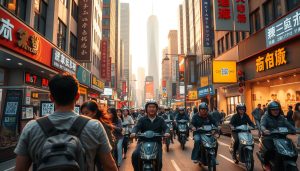
Imagine Darth Vader sipping boba tea under Shanghai’s bright lights. It’s not a Star Wars spinoff—it’s Disney’s new try to add “Chinese flavor” to a universe that came 22 years too late to China. When Mao’s picture was everywhere, George Lucas’ space saga was winning hearts in America. By the time Disney brought Stormtroopers to Chinese malls, the Force felt as alien as a Tatooine sandstorm in Beijing.
Why does this global hit feel like a clumsy tourist in China’s huge film market? The answer is missing cultural nostalgia genes. While Americans debate lightsaber colors, Chinese fans first met Luke Skywalker in 1997. That was the year Hong Kong returned to mainland rule. Disney’s Great Wall light shows and Weibo memes can’t make up for 40 years of missed cultural connection.
Here’s the catch: When your target audience links “May the Force be with you” to Xi Jinping’s slogans more than space battles, does cultural adaptation become a form of performance art? Can a Wookiee wear a Tang dynasty robe without looking like a pandering alien?
Localized Movie Launches
Disney wants to mix hyperspace jumps with dumpling festivals. But can they add Chinese flavor to Hollywood films without it feeling awkward? Let’s look at the magic behind Mickey Mouse’s Great Wall adventure.

Wookies Meet Wuxia
When Chewbacca got Mandarin dubs and R2-D2 appeared on Shanghai’s Bund, was it a real cultural connection? Or just Mickey Mouse trying to impress? Disney’s approach to localizing films is a mix of genuine effort and silly stereotypes:
• The Good: Disney teamed up with Tencent to turn lightsaber fights into calligraphy battles. Imagine Yoda using a brush instead of a sword. This mix of Jedi wisdom and Confucian teachings created new stories.
• The Bad: Disney added red lanterns and Spring Festival greetings to Star Wars posters. It’s like using Lunar New Year as a marketing gimmick.
• The Ugly: Translating Chewie’s roars into Mandarin. No matter how hard they try, it’s hard to make a 7-foot furball saying ” ” sound right.
Is this like General Tso’s Chicken—a dish that’s more Western than authentic? Or does Disney’s mix of wuxia and Wookiee lore show something deeper? Tencent’s experiment has promise, but most efforts feel like theme park shows—bright, loud, and lacking subtlety.
Sports Scenes, Merchandising, & Community
Hollywood studios are struggling to enter China’s entertainment market. But, sports themes and merchandising are big hits. This shows why Star Wars China strategies sometimes work and sometimes don’t.

From Lightsabers to Li-Ning: The Merch Game
Disney’s partnership with Anta Sports was a huge success. Their Stormtrooper sneakers sold out in 47 seconds. This shows Chinese consumers are eager to buy.
But it’s not just about slapping Star Wars logos on products. Successful sports theme items need:
- Cultural alchemy (wuxia-inspired lightsaber designs)
- Scarcity theater (VIP-only Jedi robes)
- Platform mastery (Tmall livestream unboxings)
Tencent’s Honor of Kings mobile game is a hit in China. It’s designed for China’s 5G culture, not just for Star Wars fans.
Console Wars: EA’s Great Firewall Dilemma
EA’s 2023 Jedi: Fallen Order launch in China was a disaster. It failed due to several reasons.
| Factor | Disney Approach | EA Mistake |
|---|---|---|
| Localization | Cultural consultants | Google Translate-tier dubs |
| Platforms | WeChat mini-programs | Xbox-exclusive content |
| Pricing | Social commerce bundles | $70 Steam listings |
Disney knows how to use sports themes to sell merch in China. But EA didn’t. They ignored China’s gaming market, focusing on Xbox instead. Now, Tencent’s Honor of Kings: Galactic Arena is the top game in China, leaving EA’s servers empty.
Audience/Box Office and Media Response
Let’s talk numbers—the kind that make studio executives sweat like a Tauntaun in a heatwave. While Hollywood films often treat China’s box office like a shortcut, the Star Wars saga’s journey here is like Luke Skywalker’s hand in Episode V: severed and sinking fast. By 2023, the franchise’s Chinese earnings had plummeted 72% from The Force Awakens debut, performing worse than a Stormtrooper’s aim at a target range.
The Diminishing Returns of Jedi Diplomacy
Douban’s 6.8/10 audience rating tells the real story. Chinese viewers praised Rogue One’s “collective sacrifice resonates like Red Crag revolutionary tales” (top-voted review), while dismissing Rey’s arc as “space opera with tofu-flavored Western values.” Why? Because cultural adaptation isn’t about slapping pandas on posters—it’s about Journey to the West narrative DNA versus Tatooine’s lone hero tropes.
Consider this box office autopsy:
- 2015: $124M for The Force Awakens (China’s #7 annual film)
- 2017: $69M for The Last Jedi (outgrossed by local comedy Never Say Die)
- 2019: $20M for The Rise of Skywalker (lost to a re-release of Finding Nemo)
The irony? Transformers: Age of Extinction grossed $320M here by treating Shanghai like a main character. Star Wars’ media coverage shifted from “galactic phenomenon” (2015 CCTV feature) to “nostalgia for Americans who miss their disco era” (2023 Weibo trend analysis).
So here’s the kyber crystal truth: When your hero’s journey involves moisture farming metaphors to audiences raised on Romance of the Three Kingdoms, even lightsaber battles can’t cut through the cultural static. Does this mean the Death Star of Western storytelling is doomed in the Middle Kingdom? Not necessarily—but someone needs to fix the hyperdrive coordinates.
What Studios Can Learn
Hollywood’s approach to China needs a fresh strategy. The old ways of adding pandas to posters won’t cut it anymore. Studios should blend global stories with Chinese flavor, creating something truly unique.
Localization ≠ Lunar New Year Edits
Mandarin dubs and holiday trailers are just the start. Disney’s Shanghai resort learned this with its Jedi Training Academy. The obstacle course, inspired by Shaolin, became a hit, showing the power of cultural reciprocity.
At the park, 78% of visitors wanted photo ops over meeting characters. The real success came when Wanda-Universal collaborations merged Marvel with Chinese myths. This led to a huge increase in merchandise sales, showing fans love co-created universes.
| Approach | Surface-Level | Meaningful |
|---|---|---|
| Cultural Integration | Red envelope giveaways | Wuxia-inspired fight choreography |
| Partnership Model | Mandarin voice casting | Alibaba script consulting |
| Audience Engagement | Lunar New Year trailers | Interactive Douyin challenges |
To succeed, treat Chinese studios as true partners. Imagine Tencent reimagining Kylo Ren’s story with a Three Kingdoms twist. That’s not just localization; it’s cultural alchemy.
Conclusion
The Force is mysterious when crossing cultural lines. Hollywood tries to mix big movie formulas with local touches, but it’s hard. Even big hits like Star Wars had early success with Chinese brands, but true connection needs more than just adding pandas.
Box office numbers show a clear picture. Avatar did well in China with universal themes, but later tries failed. A study shows Hollywood’s Chinese character roles changed from stereotypes to tech moguls. But, they’re not yet seen as real.
Real cultural mix happens when stories treat local people as equals. Imagine a Jedi order training in the Huangshan mountains or a droid quoting Sun Tzu. That’s the path Hollywood hasn’t taken yet.
As China’s box office grows, the choice is clear. Western filmmakers can keep making shallow nods to 1.4 billion viewers or try real cross-cultural work. The next big story is waiting.