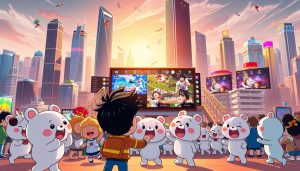
Imagine 100 players jumping onto an island, searching for weapons, and fighting until only one is left. This scenario became the defining gaming phenomenon of the 21st century. The battle royale genre changed gaming forever, turning it into a $20 billion industry. At the center of this change were two giants, Fortnite and PUBG, in a fierce battle for dominance.
PUBG started the trend with its realistic gameplay. It quickly sold 20 million copies on Steam in 2017. Then, Fortnite came along with its colorful, cartoonish style. By 2019, Fortnite had made $9 billion, showing that virtual fun could beat real-world sales.
The impact of these games was huge. When Ninja played Fortnite with Drake in 2018, 628,000 people watched. PUBG Mobile also made a big splash, getting 600 million players worldwide.
So, what made these games so special? PUBG offered intense, thrilling gameplay. Fortnite, on the other hand, became a cross-platform playground where fun and music ruled. Together, they made gaming a global event, without the need for green screens.
Origin and Rise of the Genre
Before battle royale took over Twitch, it was like a garage band. It was rough, rebellious, and fueled by pizza. What started in basements became a billion-dollar industry. Gamers chose “last one standing” over “everyone gets a participation trophy.”
From Mods to Mainstream: The Frankenstein’s Monster of Gaming
Brendan Greene didn’t invent hunger games—he just made them fierce. His Arma 2 mod was like digital Darwinism. It had 100 players, a shrinking map, and tension like tax audits.
But here’s the twist—when PUBG hit in 2017, even its creators were surprised. “Wait, people will pay for janky servers and pan combat?” Yes, they did.
Epic Games saw the chaos and thought: “What if we added LEGO mechanics?” So, Fortnite became the IKEA of shooters. Players built things, then destroyed them with rocket launchers. Their zombie mode? Forgotten fast, like a TikTok trend.
Survival Games Legacy: Minecraft’s Accidental Revolution
In 2012, while Greene was modding, Minecraft players were staging the first battle royale game through plugins. It was like watching cavemen invent fire—clumsy, but revolutionary.
| Era | Catalyst | Impact |
|---|---|---|
| Mod Era (2012-2015) | Arma 2/DayZ mods | Proved demand for large-scale PvP |
| Breakthrough (2017) | PUBG Early Access | Mainstream adoption via Steam |
| Acceleration (2018) | Fortnite Battle Royale | Cross-platform cultural takeover |
H1Z1 tried to clone the formula but was awkward. It was too hardcore for casuals, too janky for pros. Mobile trends made PUBG a pocket-sized hit, showing gamers will endure thumb cramps for that sweet chicken dinner.
Sports & Competitive Dynamics
When 100 players drop into a shrinking battlefield, you get art. The rise of battle royale changed how we play games. It also changed the rules of digital sports. Today, eSports arenas smell like big budgets, not sweat.
eSports Evolution: From Basement Streams to Stadium Shows
Remember when gaming was just three guys arguing over controllers? Fortnite’s $30M World Cup prize pool changed everything. Now, teenagers win more money in a weekend than neurosurgeons make in a decade.

The real magic isn’t the cash. It’s the cultural alchemy. PUBG’s early tournaments felt like underground fight clubs. By 2024, Fortnite’s virtual concerts with artists like Travis Scott drew 12.3 million concurrent viewers.
The Twitch Effect: How Spectator Sport Ate Itself
Twitch didn’t just broadcast games. It created a Hunger Games-style economy of attention. Streamers like Ninja became walking brand collabs, proving you could monetize panic attacks during final circles. The platform’s rise mirrors battle royale’s impact on esports – both turned survival into premium entertainment.
| Early PUBG Era | Modern Fortnite Era | Growth Factor | |
|---|---|---|---|
| Average Prize Pool | $200K | $5M+ | 25x |
| Peak Viewership | 800K | 12.3M | 15x |
| Sponsorships | Energy Drinks | Luxury Brands | 🤑→💎 |
This isn’t just gaming. It’s the Roman Colosseum with better graphics. When a holographic rapper headlines a virtual warzone, you know sports competition has jumped the shark… and landed on a jet ski doing backflips.
Global and Market Leaders
While Western gamers were perfecting their 90s building edits, Asia was rewriting the battle royale rulebook—one mobile download at a time. The real showdown isn’t happening on consoles or PCs anymore. It’s in your pocket, your subway commute, and your suspiciously overpriced data plan.
Mobile Trends: PUBG’s Eastern Empire vs Fortnite’s Western Frontier
PUBG Mobile boasts 600 million players, roughly double the population of the United States. Fortnite, on the other hand, is playing catch-up in markets where mobile is key. Tencent’s shadow empire turned battle royale into a social credit score flex. Ask any Shenzhen teenager: surviving the final circle matters more than homework.
China’s clone markets reveal the dark arts of genre innovation. When the government banned PUBG in 2021, developers simply rebranded blood as “sparkles” and called it patriotic education. Garena Free Fire’s 180 million daily active users show Southeast Asia prefers their battle royale with a side of ramen packet internet speeds.
Cultural Conquest: Memes, Merch, and Market Saturation
Fortnite dances became TikTok trends. PUBG chicken dinners inspired mukbang streams. The real endgame? Turning pixels into cultural capital. Tencent’s merch partnerships range from anime collabs to military-grade backpacks—because nothing says “I’m a winner” like carrying your schoolbooks in Level 3 armor.
| Metric | Eastern Markets | Western Markets |
|---|---|---|
| Top Game | PUBG Mobile | Fortnite |
| Monetization | In-game lucky draws | Battle passes |
| Device Preference | Mid-range smartphones | Consoles/PCs |
| Cultural Impact | E-sports scholarships | Streamer celebrities |
Here’s the brutal truth: your $1,200 iPhone struggles to run PUBG Mobile at max settings. But in Jakarta, kids are winning tournaments on $150 Androids. The mobile revolution isn’t coming—it’s already here, and it’s wearing knockoff AirPods.
Monetization, Tech, and Future Trends
While players fight for chicken dinners and Victory Royales, developers are in a quiet battle. They fight for your wallet and your attention. The battle royale gold rush hit $7 billion in 2020. This is enough to make Scrooge McDuck’s money bin look small.
But how does shooting cartoon bananas turn into real-world billions? Let’s explore the money trail through virtual malls and next-gen tech.

Skin Economy: How Virtual Jackets Fund Real Yachts
Fortnite’s Item Shop is more than just selling cosmetics. It’s the world’s most successful digital flea market. That $20 banana suit? It’s part of a $5 billion annual skin economy where players pay for pixelated drip.
The genius lies in FOMO mechanics:
- Limited-time collabs (Travis Scott concert skins saw 12M concurrent users)
- Battle Pass FOMO cycles (88% of players buy at least one season pass)
- Branded crossovers (Nike’s Fortnite “Airphoria” event drove 7M virtual sneaker tries)
PUBG counters with gacha-style loot boxes, showing both Eastern and Western models can print money. These games became platforms – part game, part shopping mall, part concert venue.
Unreal Engine 5: The Graphics Arms Race Continues
Epic’s Unreal Engine 5 demo showed nanite details so crisp, you could count pores on digital faces. For battle royales, this means:
| Feature | 2017 Quality | 2023 Quality | 2030 Projection |
|---|---|---|---|
| Texture Resolution | Potato skin | 4K pores | Holographic sweat |
| Physics Systems | Cardboard buildings | Destructible nanotech | Real-time entropy |
| Player Count | 100 bots | 120 live players | 500 AI-driven NPCs |
As mobile trends push cloud gaming, the next frontier isn’t better graphics. It’s persistent worlds where your $20 skin survives across games. Fortnite’s metaverse play already lets players port cosmetics into Rocket League and Fall Guys. The endgame? An entire digital wardrobe that outlives individual games.
Lessons for Brands and Players
Imagine Caesar streaming his conquests on Twitch. Today, Fortnite and PUBG are more than games. They’re platforms for learning about engagement. Every headshot doubles as market research.
Why did Balenciaga’s virtual trench coats sell out fast? How did Turtle Beach make $350 million a year with headset shortages? These stories show the power of digital marketing.
The New Colosseum: What Gladiators Can Teach Marketers
Ancient Rome had bread and circuses. Today, we have V-Bucks and Victory Royales. The real competition is between brands for attention in the eSports evolution.
Consider these stats:
| Tactic | Traditional Sports | eSports Marketing |
|---|---|---|
| Audience Reach | Regional fanbases | Global digital tribes |
| Engagement Time | 3-hour games | 8+ hour live streams |
| ROI Measurement | TV ratings | Real-time emote analytics |
PUBG’s partnership with McLaren wasn’t about selling cars. It sold the dream of outdriving danger. Players spend 1,800 G-Coin on virtual sports cars. They’re buying status, not just a car.
Meta Mastery: Beyond Just “Git Gud”
Pro players are more than just gamers. They’re content empires. Ninja’s blue hair is more famous than many logos. Here’s how to level up:
- Monetize your playstyle (aggressive pushes = thrilling stream content)
- Treat Discord like your war room – it’s where video game startups find beta testers
- Negotiate sponsorships using metrics even Wall Street can’t ignore (peak viewers > quarterly reports)
The next Nike isn’t making shoes – they’re coding skins. PUBG Mobile’s 2024 data shows players spend 47% more time with branded cosmetics. Your audience isn’t watching ads. They’re living them.
Conclusion
Twenty years ago, pixelated soldiers roamed Arma’s dense jungles. Now, 950 million players circle Fortnite’s island like moths to a light. Battle royale games didn’t just change gaming; they became a part of our culture.
They show our love for big shows, survival, and even strawberry-flavored rocket launchers. Epic Games and PUBG Corp keep the games fresh with new maps and mobile play. But, do we control these games, or do they shape us?
Kids talk about loot drops like Wall Street pros, and parents play together instead of watching baseball. These games make deep questions fun. Every game asks: “What will you become?”
Will you be a camper, a hero, or that guy who blows himself up? The real goal isn’t just winning. It’s the stories we’ll share about late-night gaming sessions when we’re old.
As servers close, the battle royale model stays strong. It changes fast, taking in new trends and ideas. The revolution was live-streamed, not televised. Now, my gaming partner is yelling about a Mythic Goldfish. Some legacies need constant care.