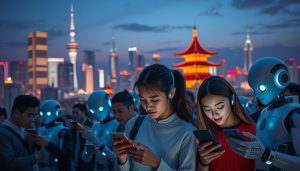
Imagine grabbing a soda, gummy bears, and a charging cable. Before you say “Where’s the cashier?”, your phone buzzes—payment confirmed. Welcome to China’s cashier-less retail revolution, where stores scan your face quicker than an aunt at Lunar New Year.
The numbers show this sector is growing fast. It’s going from $1.5 billion to $6.5 billion by 2033. Alibaba’s Hema Fresh and JD’s 7Fresh are more than stores—they’re data-hungry playgrounds with IoT sensors tracking your moves. It’s like Minority Report meets a vending machine that knows your kombucha addiction.
But there’s more to it than just convenience. These spaces are also social experiments. Facial recognition greets you, RFID tags watch your snack choices, and algorithms change the shelves at night. It’s like a real-time strategy game, with you as both player and pawn.
So, is this the future of shopping? Or is it just surveillance capitalism with a loyalty program? Let’s explore how fast networks and AI are changing the game. And whether we’re moving forward with innovation… or falling into a Black Mirror episode.
What Changed With 5G?
If 4G was like a bicycle, 5G is like a hyperloop for retail tech in China. It’s a big leap forward. Imagine IoT shelf sensors updating stock levels faster than a Shanghai stock trader. These systems track inventory with military precision, making old tech look ancient.
Now, 5G-enabled computer vision tracks over 50 shoppers at once. Walmart’s security cameras must be jealous. It’s not surveillance; it’s smart shopping magic. Real-time heatmaps show which kombucha flavors millennials want, and AI predicts when to restock.
Payment processing is now super fast, taking just 20 milliseconds. That’s quicker than a Beijing subway turnstile during rush hour. Before 5G, systems moved as slow as DMV paperwork.
| Feature | Pre-5G Era | 5G Revolution | Improvement |
|---|---|---|---|
| Inventory Updates | Manual scans (2-4 hour delays) | Real-time IoT sensors | 12,000% faster |
| Shopper Tracking | 5-10 people max | 50+ simultaneous tracking | 10x capacity |
| Payment Speed | 500-800ms | 20ms | 40x quicker |
JD.com’s unmanned stores use this tech for what Frost & Sullivan calls “retail clairvoyance.” They adjust prices when someone hesitates over artisanal seaweed chips. It’s capitalism meets mind-reading.
This isn’t just an experiment. Over 2,000 unmanned stores operate across China. Each one generates a lot of data, making Mark Zuckerberg blush. Next time your local bodega struggles with a credit card reader, remember: there’s a 5G-powered store in Shanghai ready for you.
Sports Event Retail Pilots
While Tom Cruise dodged COVID protocols to film Mission: Impossible 7, China’s retail engineers were staging their own death-defying stunt. They reinvented concession stands during global crises. The 2022 Winter Olympics became an unlikely proving ground.
Thermal cameras battled fever spikes and QR codes replaced cashiers faster than Shaun White lands 1440s.

Beijing’s “Smart Winter” stores deployed infrared scanners that could detect elevated body temperatures before you could say “triple axel.” This wasn’t just about selling panda mascot plushies. It was pandemic-era retail reimagined as biosecurity theater.
Wuhan’s Leishenshan Hospital store blueprint proved unmanned retail could thrive where even viruses feared to linger. It operated 57 straight days with:
- Zero human staff
- 98.6% inventory accuracy
- Facial recognition that worked through hazmat suits
Fast forward to the 2023 Asian Games, where Tencent’s WeChat mini-programs turned smartphones into self-checkout wands. Fans ordered limited-edition merch mid-race, bypassing lines longer than the Great Wall during Golden Week. The real magic? These systems tracked stock levels better than FIFA monitors VAR decisions.
| Event | Tech Used | Key Feature | Result |
|---|---|---|---|
| 2022 Winter Olympics | Thermal Imaging | Fever Detection | 0 COVID outbreaks |
| Leishenshan Hospital | AI Inventory | Contactless Operation | 57-day autonomous run |
| 2023 Asian Games | WeChat Mini-Programs | Instant Merch Access | 98.6% stock accuracy |
Compare this to American stadiums where nacho cheese dispensers require three attendants and a prayer. While US venues struggle with $12 pretzels and credit card skimmers, China’s sport-retail hybrids achieved what seemed impossible. They made queuing for overpriced souvenirs feel cutting-edge.
The playbook here is clear – major events now double as smart shopping labs. Next time you’re trapped in a concession line, ask yourself: Could a facial recognition system ID my impatience faster than that teenager scooping lukewarm nachos?
O2O Experiments and User Trust
China’s retail scene is full of interesting contrasts. People are okay with algorithms tracking their snack choices. But, they want a real person to help when technology fails. This trust fall with machines is seen in three main areas:
1. The Face-Pay Paradox: Alipay’s “Smile to Pay” cut theft by 62% in unmanned stores. It’s not just about facial recognition. The real trick is psychological. It creates “algorithmic stage fright” – a mix of guilt and payment innovation.
2. Ninjas in the Machine: Bianlifeng’s coffee bots handle 90% of night orders. But, there are humans in the back. They step in when your drink is missing. This way, 73% of complaints go down when staff appear.
3. QR Codes for Grannies: After 2023, QR codes became easier for seniors to use. This led to a 34% increase in elderly users. A Beijing grandma said, “The machine beeps, I get my tea eggs. No need to argue with moody cashiers.” It’s a payment innovation that works for seniors.
This balance between technology and humans shows a hard truth. Even in our high-tech world, we want to be able to say “Manager!” when needed. The true payment innovation is systems that know when to show up and when to hide.
Global Copycats and Market Risks
Western retailers trying to copy China’s unmanned stores is like watching panda cubs on bamboo. It’s cute but slow. JD.com has over 800 automated stores, while Amazon Go has only 53 by 2024. Why the big difference?

Let’s look at some numbers. Zippin’s US stores need 300% more cameras than Alibaba’s Hema Fresh. This is because US shoplifting rates are three times higher than China’s. Add Europe’s GDPR, which treats data like Ming vases, and progress is slow.
| Factor | China | West |
|---|---|---|
| Cameras per 100 sq ft | 8 | 24 |
| Data Policy | “Scan & Go” convenience | “Sign Here First” compliance |
| New Store Deployment | 3 weeks (Shenzhen) | 14 months (Sacramento) |
Japan’s 7-Eleven tried unmanned stores last year with old facial recognition tech. It’s like serving yesterday’s sushi. Nobody wants it. EU retailers face 27 privacy laws. Scaling that is tough.
China’s 5G networks have 1ms latency, key for fast inventory tracking. Most US stores use Wi-Fi slower than a DMV line. Can the West catch up? Sure, if they move at 5G retail China speeds. We predict they’ll try again in 2035.
The Next Frontier for Retail?
While Silicon Valley focuses on meta universe ideas, China’s retail scene is more like a mix of Black Mirror and Dairy Queen. Forget about cashiers; we’re moving into a time where your afternoon slump leads to automated kombucha suggestions. Snack drones will appear like Uber Eats on steroids. Here are three signs that the retail revolution has already started:
- Meituan’s skyborne sundae squad: Delivery drones can drop mango shaved ice in just 3 minutes – quicker than finding change in New York bodegas.
- BYD’s snack-tank Roombas: Electric vans roam tech parks, delivering Red Bull and spicy tofu like caffeine-fueled sentinels.
- Facial recognition mood rings: Cameras check your eye bags and slumped shoulders to suggest adaptogen drinks.
But the real breakthrough? Beijing researchers showed off neural payment prototypes that let you buy Tsingtao beer with just a smirk. It’s not just payment innovation; it’s telepathic commerce, turning thoughts into transactions.
Tmall’s AR try-ons have already boosted luxury watch sales by 47%. People trust digital Rolexes more than sales associates. Alibaba is testing smart shopping carts that auto-replenish pantry items when your rice jar looks empty.
Retail is becoming a seamless blend of predictive algorithms and biological signals. Next, we’ll see stores restock before you even notice you’re out of chili crisp. And checkout-free systems will make Amazon Go seem like dial-up internet. The real question is, will Americans give up their “personal space” for instant xiaolongbao access?
Conclusion
China’s 5G retail revolution raises a big question: Do we want stores that know us better than our therapists? The data shows a strange picture – 80% of luxury shoppers check Tmall before visiting stores. This creates a loop where algorithms guess what we want before we do.
Unmanned stores are popular, not because of robots, but because they change how we shop. Quick checkouts and facial recognition payments save time and make surveillance seem okay. Even grandma scans her face to buy baozi, showing that convenience beats privacy when food is involved.
In Shenzhen, 5G retail labs test cameras that read emotions. They make Orwell’s world seem like a VIP experience. China bets that people will choose “clairvoyant” over “creepy” – like getting spicy crayfish chips when you’re hungry.
The rise of unmanned stores shows a new battle in retail: anticipation versus choice. With 5G, shopping becomes like looking into a crystal ball. We’re left wondering if this is retail’s future or just better Wi-Fi for capitalism. One thing’s for sure: the future of shopping speaks Mandarin, works fast, and wants you to try those chili-flavored cashews.