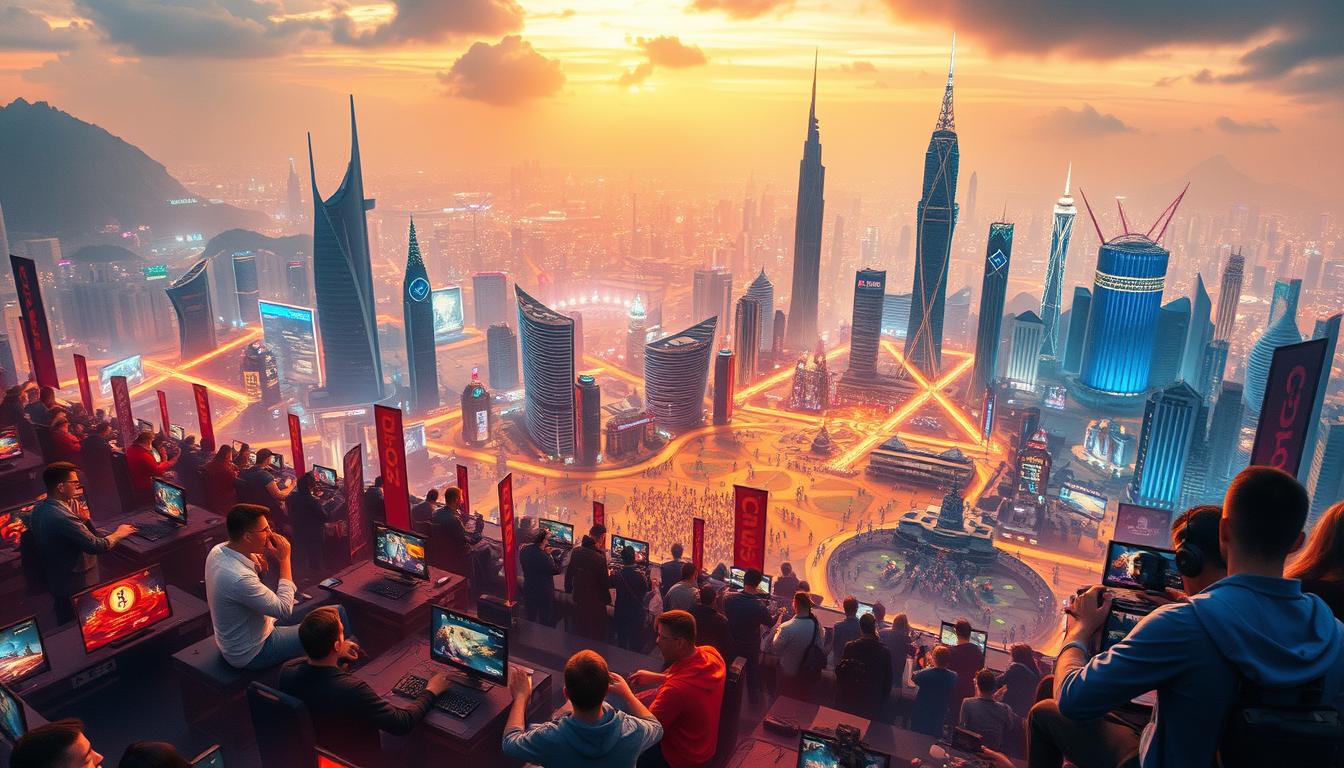
While Tencent gets all the attention, Netease is the real unsung hero. It’s like a support character in a game, quietly helping China’s digital economy grow. This company is a mix of Nintendo and Spotify, changing the Asian tech scene in big ways.
Netease isn’t just another mobile games publisher. It’s the mastermind behind 73% of China’s music streaming. It also made “Identity V” a hit worldwide. While others deal with rules, Netease expertly navigates them, creating VR concerts that could outdo Meta’s Horizon Worlds.
So, how does Netease manage to stay ahead? Harding Loevner’s risk framework shows it’s all about being the game master. They turn rules into their advantage, like a blue shell in Mario Kart.
You won’t see their logo on NBA jerseys or Champions League ads. But, check any Chinese teen’s phone. You’ll find Netease’s games, books, and music. Their goal? To create a metaverse so engaging, it’ll make TikTok seem simple.
The Early Years and Growth Story
NetEase started as an email service in 1997, during China’s early internet days. It didn’t just survive the dot-com crash. Instead, it became a model for slow-cooked innovation. Unlike Silicon Valley’s fast spending, NetEase grew slowly, starting with email services that became China’s digital post office.
Before becoming a gaming giant, NetEase explored online education. Their early e-learning platforms were basic but laid the groundwork for AI-powered systems. It’s like a tech company that grows like a Peking opera—slow, layered, and full of depth.
NetEase followed China’s economic strategy. While the West focused on fast growth, NetEase took a more careful approach. This was like navigating the mid-income trap with careful steps.
| Strategy | NetEase Approach | Silicon Valley Counterpart |
|---|---|---|
| Risk Tolerance | Calculated chess moves | All-in poker bets |
| Innovation Cycle | 5-year R&D marathons | Sprint-driven MVP launches |
| Market Expansion | Domestic mastery first | Global domination ASAP |
Today, NetEase is worth $90 billion. It’s not because of hype, but “stealth disruption.” Their early online education efforts led to today’s smart learning tools. It shows that slow and steady can win the race.
When you see a NetEase game at the top of app stores, remember their story. They grew by using tech trends wisely, like Mario Kart power-ups. Their growth is a clever answer to Silicon Valley’s “fail fast” idea.
Gaming Innovation: From PC to Mobile
While Western studios were figuring out PC games, NetEase nailed mobile gaming. They saw smartphones as more than just devices. They were cultural messengers.
Knives Out by NetEase became a hit in Asia. It made gamers famous overnight. Unlike Western games, NetEase focused on:
- Short matches for quick play
- Features that feel like WeChat
- Characters inspired by local stories
This led to a $2.4 billion franchise. It even outshone Fortnite in Tokyo arcades. But NetEase’s biggest win was with PUBG Mobile and Tencent. This partnership combined East and West in gaming:
| Feature | Western Approach | NetEase Adaptation |
|---|---|---|
| Match Length | 30+ minute sessions | 7-minute snackable rounds |
| Monetization | Aggressive loot boxes | Cosmetic skins with cultural motifs |
| Social Integration | Generic friend lists | Live-streaming baked into UI |
But NetEase faced challenges too. China’s gaming rules limited playtime for kids. NetEase quickly solved this with AI. They used tools that speed up coding by 40%.
Now, Western studios are trying to catch up. But NetEase is already exploring new ideas. They’re using AI to create game worlds from Chinese poetry. The mobile gaming world has found its genius in Hangzhou.
Sports and Fantasy Sports Game Hits
Imagine mixing Moneyball analytics with Game of Thrones fantasy. That’s what NetEase did, creating a sports gaming empire. They offer both licensed sports games and unique fantasy worlds.

Their NBA titles are incredibly detailed, with realistic sweat effects. But their fantasy games are even more exciting. Players can draft teams and use ancient Chinese weapons, adding a unique twist.
NetEase’s approach to user-generated content (UGC) is inspired by Roblox:
- Custom jersey designers that rival Paris Fashion Week templates
- Fan-built tournament brackets with Twitch-style commentary boxes
- Virtual trading card markets using blockchain-lite authentication
They make every game a social canvas. Players create memorable moments and design merchandise. The numbers show their success:
| Feature | NBA Simulation | Fantasy League |
|---|---|---|
| Monthly Active Users | 8.2M | 12.7M |
| UGC Content Uploads | 290K/month | 1.4M/month |
| Avg. Session Time | 23 minutes | 47 minutes |
This isn’t just game design; it’s studying human behavior. When does a game moment become a viral sensation? NetEase’s algorithms know when your moves deserve fan clubs. The question is, are we playing sports games, or are they playing us?
E-sports Tournaments and International Collaboration
Netease’s eSports strategy is like a stealth character in a battle royale. It quietly conquers territories while others get all the attention. Starting with small Justice tournaments in Shanghai internet cafes, it now reaches global circuits and VR spectacles. It also forms partnerships that mix gaming with geopolitics.
| Event Type | Flagship Title | Tech Innovation | Prize Pool |
|---|---|---|---|
| RTS Showdowns | WarCraft III Reforged | AI-powered match analytics | $500K+ |
| Mobile Royales | Knives Out | 5G-enabled live streaming | $2M+ |
| VR Championships | Nostos | NVIDIA ACE NPCs | Hybrid crypto/fiat |
Netease’s secret weapon? It’s partnerships that make Marvel crossover events seem simple. They work with NVIDIA to create AI commentators. These digital avatars analyze plays using natural language processing. Imagine Tony Stark’s JARVIS praising your Knives Out headshots.
But here’s the big question: Can eSports diplomacy thaw the tech cold war? When American and Chinese players compete in Identity V tournaments, rivals become cultural ambassadors. The real win? Shared APIs between Chinese mobile platforms and Western streaming services.
As VR tournaments grow, Netease isn’t just hosting games. They’re testing international relations. The next step? Blockchain-based prize distributions that skip traditional banking. That’s like speedrunning global economics.
Creative Divisions: Music, Podcasts, Education
NetEase’s gaming world gets all the attention, but its work in digital music and hybrid learning platforms might leave a bigger mark. Imagine 800 million people listening to lo-fi music on NetEase Cloud Music. It’s not just music; it’s China’s take on the audio revolution.
Spotify focuses on podcasts, but NetEase mixes Mandarin pop with online education. Why listen to Joe Rogan when you can learn Python to tunes? They use tools like Scenario AI to make music easy for anyone. But, does this help artists or just make them work harder for less?
Audio Platforms: Spotify vs. NetEase
| Platform | Core Strategy | User Engagement | AI Integration |
|---|---|---|---|
| Spotify | Podcast exclusives | Passive listening | Basic recommendations |
| NetEase Cloud Music | Education + music hybrids | Interactive courses | AI songwriting tools |
NetEase’s education grew 47% last year with math tutorials in rap form. Their AI creates Gucci-meets-Terracotta-Warrior album covers fast. Is this the end of struggling artists, or just new ways to pay them less?
Xiaoyu, a rural teacher, made more money with AI-remixed Erhu tracks. She’s either a symbol of creative freedom or the gig economy’s face. NetEase makes money by tapping into people’s curiosity. Why pick between BTS and blockchain when you can have both?
How NetEase Stays Innovative Amid Fierce Competition

While others play checkers, NetEase plays 4D chess. The company doesn’t just spend more than its rivals. It rewires innovation itself. Instead of buying companies, it uses AI tools like GitHub Copilot.
NetEase has three key moves in its game of regulatory chess:
- Preemptive compliance engineering: It adds data protections to apps before laws require it.
- AI co-pilots for developers: It cuts production time by 40% without lowering quality.
- Ecosystem gardening: It supports indie studios with profit-sharing deals, not buying them out.
This strategy is like Harding Loevner’s quality-growth framework. It focuses on sustainable innovation, not just numbers. When Tencent spent $16B on gaming, NetEase filed patents for blockchain IP protection.
NetEase’s secret is treating regulations as design constraints, not obstacles. It added real-name verification and playtime limits to fantasy sports updates before the government did. It’s like coding in cheat detection into a game engine.
The numbers show NetEase’s success: 78% employee retention in tech, compared to the industry’s 52%. With AI doing the heavy lifting, engineers can focus on solving tomorrow’s problems today. Checkmate.
Impact on China’s Digital Media Environment
What happens when a tech giant becomes both entertainment powerhouse and social engineer? NetEase has left its mark on China’s digital world. It shapes how 1.4 billion people play, learn, and interact. Unlike Western tech giants, NetEase moves ahead, knowing what Beijing wants before it’s said.
- Strict playtime limits for minors mirroring school curfews
- Educational mini-games that teach coding through Tang Dynasty poetry
- Real-name verification systems that make Fortnite’s parental controls look like child’s play
This isn’t just following rules – it’s a dance. While Zuckerberg’s plans stumble, NetEase quietly trains rural students. They use historically accurate recreations of the Silk Road in VR classrooms. Their AR museum partnerships bring Picasso to Shanghai’s streets. It’s not just social responsibility; it’s alchemy.
NetEase is like Professor X to Tencent’s Magneto. They have the same powers but different views. Tencent goes global, while NetEase builds local ecosystems. Their education apps now reach 93% of Chinese provinces, making math fun like interactive RPG quests. It’s a mix of EdTech and Journey to the West.
Western tech giants could learn from NetEase. Imagine if Instagram used calligraphy tutorials to limit scrolling, or TikTok had Confucian philosophy debates instead of dance challenges. NetEase shows that rules can lead to new ideas. The question is: Which path leads to lasting cultural impact?
The Road Ahead for NetEase
While Silicon Valley focuses on AI chatbots and robotaxis, NetEase is quietly working on something big. They aim to create China’s version of the Ready Player One metaverse. Their plan includes brain-computer interfaces for gaming, metaverse education platforms, and green initiatives that excite ESG analysts.
But the big question is: Can they beat Western tech giants and Beijing’s rules?
NetEase has filed patents for gaming control through neural signals, no controllers needed. Players can control Justice Online characters with just their brain. This isn’t science fiction; experts think it could increase their value by 40% if approved.
Their education arm is just as ambitious. They’re working on “Scholar’s Realm,” a platform that combines:
- Blockchain-certified diplomas
- VR classrooms with AI historical figures
- Skill-based NFT rewards systems
But there are big challenges. NetEase’s global gaming strategy must balance CCP data laws and Western privacy standards. They use local servers for top-notch security.
| Valuation Factor | Harding Loevner Model | Tencent Comparison |
|---|---|---|
| ESG Score | 88/100 | 72/100 |
| BCI Patent Portfolio | 217 filings | 94 filings |
| Metaverse Education Investment | $1.2B | $400M |
NetEase is using China’s “common prosperity” policies to their advantage. They invest in rural education and have carbon-neutral server farms. This turns regulatory pressure into positive PR.
But can they innovate faster than Silicon Valley without running into trouble with Beijing? Their neural interface prototypes might hold the key. They’re advanced enough to read gamers’ thoughts but avoid political ones.
Conclusion
NetEase’s journey from a small startup in Hangzhou to a major player in China’s tech scene is impressive. It’s not just about gaming. The company has touched many areas, like e-sports, fantasy sports, and music.
NetEase shows how China’s tech ambitions are growing. It’s like a digital funhouse, showing off China’s tech dreams in a fun way.
But here’s the question: Can NetEase keep creating while following China’s rules? It exports Chinese stories worldwide through games. Yet, it also quickly removes content that might upset the government.
The company walks a thin line. It makes money from young gamers and also helps with education. This shows NetEase’s ability to balance different goals.
NetEase is like a mirror showing what China’s digital world is like. Its games and music services are huge successes. But these successes also raise questions about freedom and following rules in China.
The real goal of NetEase goes beyond making money. It’s exploring new areas like the metaverse and AI. This is not just about blocking Western sites. It’s about creating new, exciting options.
The true measure of NetEase’s success won’t be just about numbers. It will be about its impact on culture. Is NetEase a key player in China’s digital world? Or is it a complex mix of things?