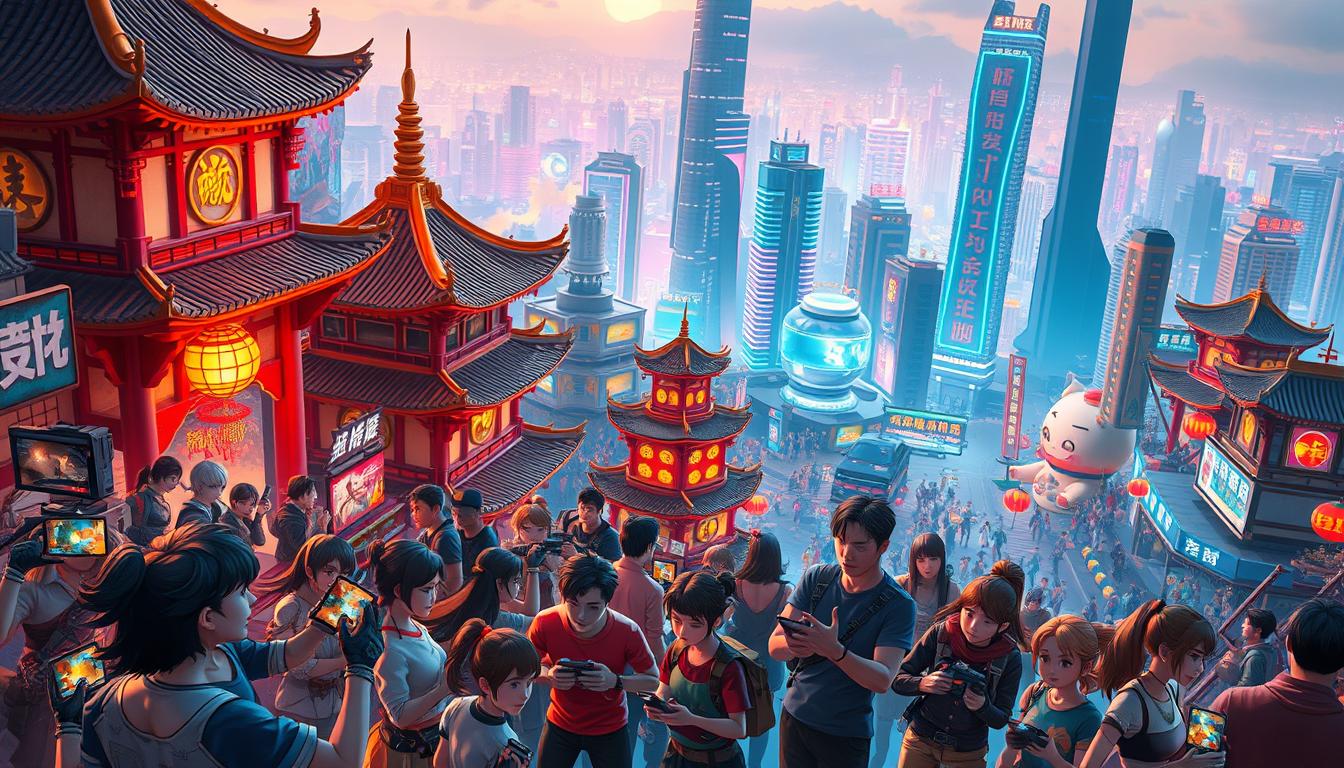
Imagine a digital Sun Wukong fighting demons with Souls-like skill. Your phone is buzzing with updates on makeup collabs. This is China’s gaming world, where old stories meet Fortnite-style marketing.
Forget about Mario Kart’s colors. We’re talking about games like Black Myth: Wukong. It turns Journey to the West into a tight combat system, like Shanghai’s busy subway.
Mobile games rule here, just like Taylor Swift does at concerts. They have a 79% market share, while consoles are less popular. Why? It’s because smartphones and fan engagement strategies mix well. Genshin Impact shows how gacha mechanics can make billions, thanks to smart marketing and anime looks.
Now, look at the strategy: Perfect Diary teams up with mythical game characters. Tesla even puts Cybertrucks in battle royales. It’s not just gaming; it’s guochao nationalism and Gen Z’s TikTok style. The big question is, when will your grandma’s mahjong app sell NFT pandas?
Notable Crossovers: Mechanic, Story, and Sport
China’s games are mixing genres in a way that’s impressive. Honor of Kings is a MOBA that combines Three Kingdoms heroes with League of Legends mechanics. It’s a blend of history and competition that’s truly unique.
Western games like Fortnite add Spider-Man skins to their characters. But Chinese games go deeper. Honor of Kings turns historical figures into playable characters with real abilities. Cao Cao, for example, can control terrain, just like in history.
Eggy Party is a battle royale that mixes Squid Game with Teletubbies. It’s colorful and fun, appealing to all ages. Its simple gameplay and social features make it a hit worldwide.
- No complex controls – just jump, grab, and sabotage
- Cultural neutrality in character design (who hates eggs?)
- Social features mimicking WeChat’s group chat dynamics
Fortnite’s Marvel collaborations are fun but lack substance. China’s games ask if crossovers can mean more than just marketing.
Honor of Kings has 100 million daily players, more than Germany’s population. Eggy Party reached 30 million downloads quickly. Western games keep reusing the same characters. Is China’s creativity breaking through?
eSports Innovation
When eSports meets binge-worthy drama, China’s gaming scene gets intense. Developers are creating eSports hybrids that mix competitive gaming with scripted stories. Imagine LeBron James training in Westworld simulations, with cameras capturing his drama.
The King’s Avatar is a live-action series about pro gamers. It’s like Top Gun but with pro gaming tactics. It has three key ingredients:
- Real pro gaming tactics used as plot devices
- Behind-the-scenes drama rivaling Succession
- Character arcs tied to actual tournament timelines
The real innovation is in Tencent’s K-pop style ecosystem. Their approach is unique:
- Launch competitive game (Stage 1: Arena)
- Produce companion drama (Stage 2: Fandom)
- Sell virtual training regimens (Stage 3: Monetization)
These regimens make CrossFire’s time-travel narrative intense. Players relive historic battles through VR simulations. The training is so tough, even Navy SEALs might pause.
China’s eSports hybrid model shows that competition isn’t enough. Fans want stories where the keyboard warrior becomes a hero. They want merch lines and TikTok spinoffs too.
User Trends and Popular Examples
China’s gaming scene is mixing things up, blending different styles in a big way. PUBG Mobile’s zombie mode is a perfect example. It combines survival horror with battle royale, making it a hit in Asia.
This mix of styles has made the game more engaging. It’s like adding sriracha to soy sauce. The result is a game that keeps players coming back for more.
Love and Deep Space is another game that breaks the mold. It’s a dating sim that also has RPG elements. Players can level up their relationships through combat.
This game shows that gamers want more than just fighting. They want emotional connections too. It’s a lesson learned from games like Mortal Kombat.
| Feature | Traditional Battle Royale | PUBGM Zombie Mode | Love & Deep Space |
|---|---|---|---|
| Core Loop | Last player standing | Survive waves + build defenses | Romance + skill trees |
| Monetization | Skin sales | Zombie-themed cosmetics | Date-night weapon packs |
| Avg. Session Time | 22 minutes | 37 minutes | 49 minutes |
Chinese studios are using data to create new game styles. They look at what players like and mix it up. This way, they make games that are both fun and engaging.
For example, when players loved zombie mode, the developers added more PvE elements. Now, the game is a mix of strategy, chaos, and fun.
Today’s games are made by combining different styles. Tencent designers call it creating attention ecosystems. And it’s working, with games that keep players hooked.
Impact on Developers, Monetizers, and Fans
China’s mobile game world is like a fast-paced dim sum cart. Developers keep adding new games, while monetizers push “limited-time offers” hard. For example, Ruixing Coffee’s Black Myth: Wukong game sold 2 million latte sleeves in just 53 minutes. It’s like a quick TikTok trend.
But there’s more to it. It’s a mix of art, business, and globalization specialists turning cultural icons into games.
Developers are now under a lot of pressure:
- They work for 72 hours straight to add brand partnerships before the game comes out.
- They must talk to folklore experts to make sure the game feels authentic.
- They use real-time data to decide which characters to turn into NFTs next.
Mobvista’s strategy is all about finding a balance. They use beautiful art to make players feel good about spending money. Their game, “Gacha Gardens”, is a perfect example.
But is Tencent’s use of traditional art in their games a good thing? Or is it just a way to make more money? The numbers show that players don’t mind. In fact, 68% of Gen Z gamers think Dynasty Warriors skins are educational.
This shows how gaming has changed. In China, your favorite stories can become just another game feature. It’s all about making players feel special while they spend money.
Sports and Fitness Integration
Imagine your morning jog turning into a boss battle. China’s gaming scene is merging sports crossover games with fitness. Now, people use dumbbells and get dopamine hits from gaming.
The new fitness trend isn’t just about protein shakes. It’s about squats to dodge virtual obstacles while tracking XP points on smartwatches.
In Beijing, parks are filled with two groups: tai chi fans and gamers. Tencent’s Dragon Raja Fitness app lets you earn in-game currency by running. NetEase’s Rhythm Master has seniors dancing to EDM remixes of revolutionary songs.
Is punching virtual zombies good for your heart? The Chinese Sports Bureau thinks so.
Here are three ways gaming changes physical culture:
- Municipal governments replace gym equipment with Pokémon GO-style AR stations
- Esports academies require athletes to keep BMI scores like Olympic swimmers
- Fitness trackers unlock game content for hitting step goals (10,000 steps = rare loot box)
These sports crossover games act as a secret health policy. When Keep (China’s Peloton) added RPG elements, workouts increased by 63% in trial cities. Even the politburo supports it, adding activity goals in mobile games to fight obesity.
But, can virtual exercises solve big health problems? While gaming is engaging, experts question if it’s as good as real sports. The answer might be in combining both, like Alibaba’s New Retail Gym where your deadlifts affect your MMORPG stats. That’s blending culture and fitness in a unique way.
The Future Landscape
Imagine a Shanghai server farm buzzing with AI quests. Could China’s 14th Five-Year Plan make gamers help create state-approved metaverses? The mix of game crossovers China plans and government tech rules feels like a story where Beijing decides the plot. 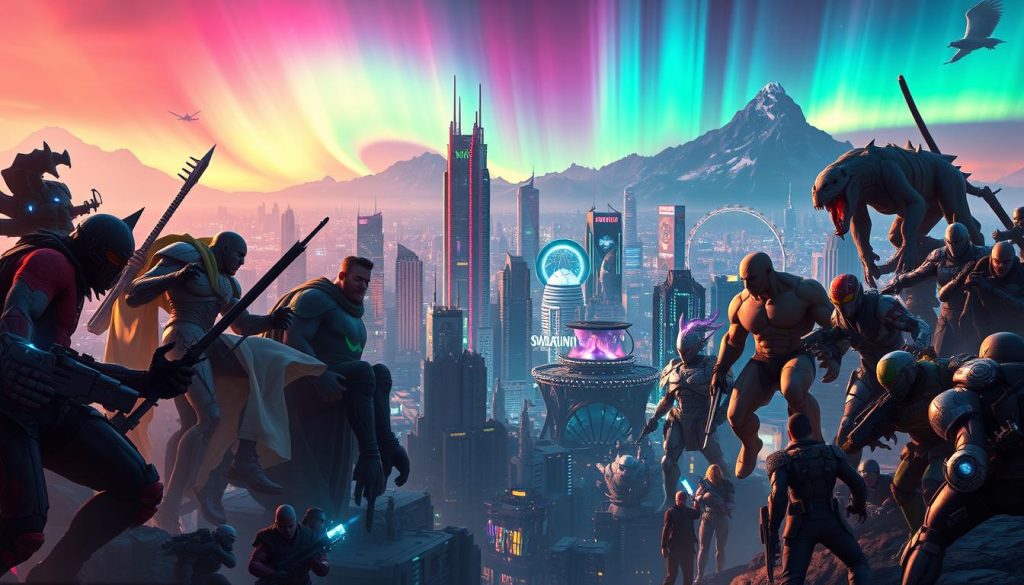
Three main forces will shape this future:
- Metaverse Mechanics: Tencent’s “Super Virtual Scene” project aims to blend social media, gaming, and e-commerce into one world. It’s like Animal Crossing meets Alibaba’s Tmall.
- AI Storysmiths: NetEase’s AI tools let players create endless crossover stories—until content filters step in.
- Unreal Engine 5 Realities: Perfect World’s games now show qipao fabrics in 8K detail. They look stunning but might not be politically neutral.
| Tech Trend | Creative Opportunity | Regulatory Risk |
|---|---|---|
| Metaverse Integration | Cross-platform character portability | Centralized content moderation |
| AI-Generated Quests | Personalized story branches | Algorithmic narrative control |
| UE5 Visuals | Hyper-real cultural showcases | Historical revisionism via graphics |
China’s push for “core tech self-reliance” might turn crossover games into propaganda tools. Imagine Cyberpunk 2077’s Night City with patriotic quests instead of corpo overlords.
Will players worldwide accept these new games, or will they see them as a form of soft power? It might depend on Tencent’s next big crossover game. Will it feature Honor of Kings characters with Marvel’s Avengers, or will it include Xi Jinping Thought during loading screens?
Conclusion
China’s gaming world is a place where culture and technology meet. Games like Genshin Impact and Honkai: Star Rail mix martial arts with anime, appealing to players worldwide. Tencent’s Arena Breakout and NetEase’s Identity V also stand out, blending different game styles.
These games are more than just fun. They are cultural messengers, carrying stories and values across borders. By adding traditional Chinese elements to their gameplay, developers make the games feel real and meaningful.
The future of gaming looks bright, with Chinese studios leading the way. They are not just making games for China anymore. They are making games for the world, using platforms like Bilibili and Douyin to reach more people.
So, what’s next? Will you find yourself playing games that teach you Mandarin? Or will your favorite game have the Great Firewall’s seal of approval? The possibilities are endless, and the excitement is building.