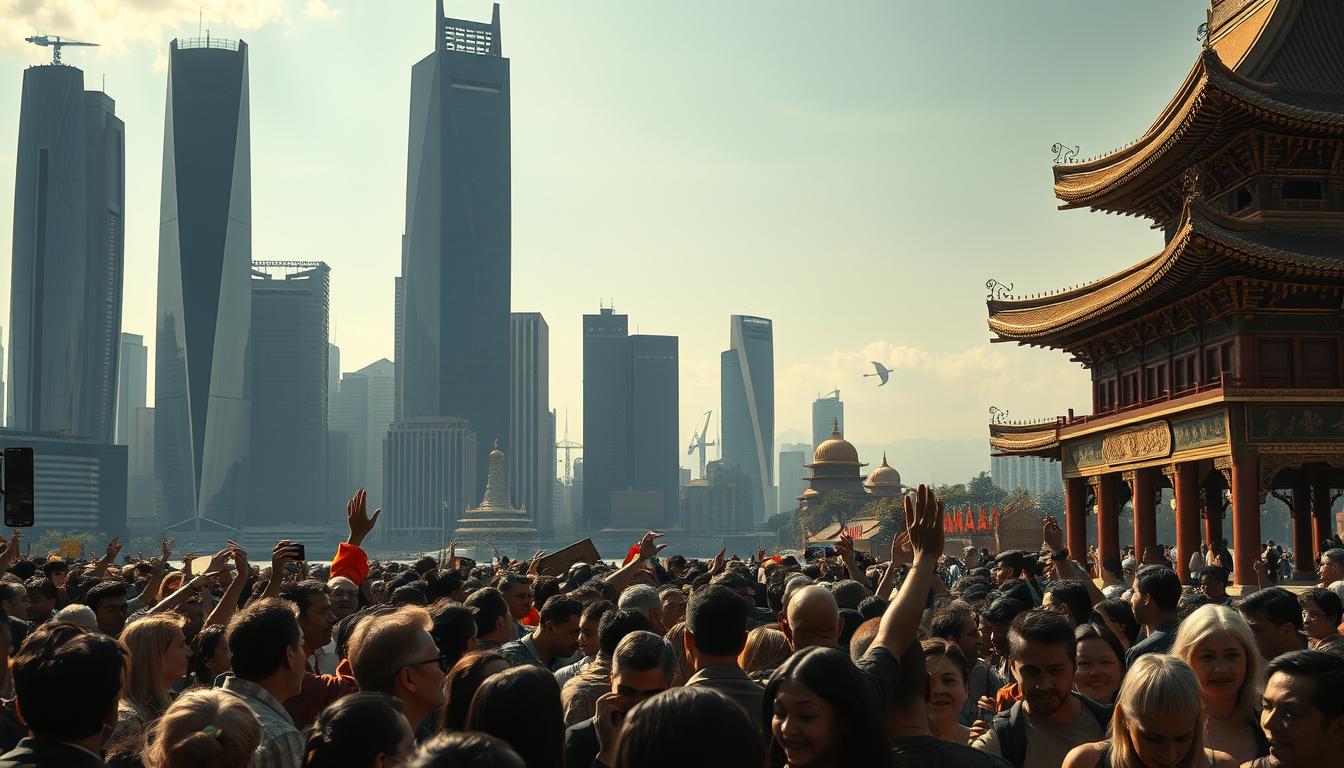
In Beijing, people use face scans to pass through subway gates. In San Francisco, lawmakers have banned this technology in public. This shows a big difference in how we view technology.
This isn’t just about tech. It’s about two different ways of thinking. The East sees technology as a tool for the community. The West sees it as a way to protect individual rights.
Harvard’s Joseph Henrich explains why we see tech differently. In the West, we worry about privacy. In the East, we see it as a way to make life easier.
Amazon Rekognition is a key example of this. It’s seen as a threat in Portland but useful in Shenzhen. This shows how our values shape our views on technology.
This debate is not just about cameras and code. It’s about how we live together in a digital world. Is giving up privacy worth the convenience? The answer depends on where you come from.
Facial Recognition Explained
Let’s get real about facial recognition. It’s not as advanced as you might think. It’s more like studying frogs in biology class, but with computers. These systems look at over 80 points on your face, making a mathematical blueprint that’s as unique as your fingerprint.
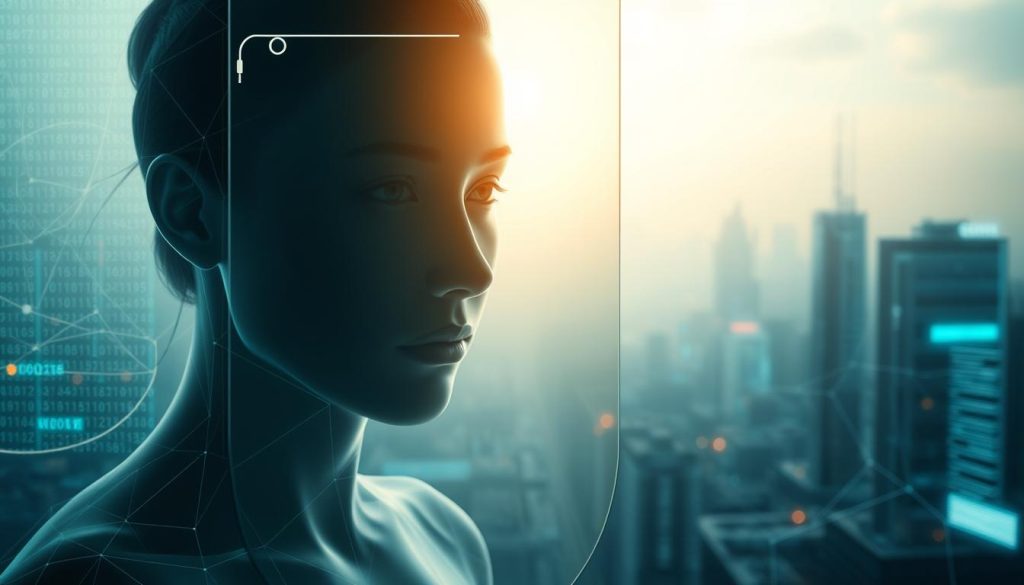
Amazon’s Rekognition API works like your brain when you see a familiar face. It compares your photo to millions of others. Ever felt like The Terminator‘s HUD was too familiar? Now you know why.
But here’s the catch: “Just one more thing…” What happens to your biometric data after it’s scanned? A 2025 Forbes analysis found 74% of U.S. employers use facial recognition. This tech can lead to job loss, even if you’re not guilty of a mistake.
Here’s a surprise: your facial signature isn’t as unique as you thought. Studies show some systems confuse siblings 40% more than humans. Maybe Mom was right when she said you’re not that special.
Western Skepticism vs. Eastern Adoption
Why does Shanghai smile while Seattle scowls at face-scanning tech? It’s a cultural battle older than your grandma’s mahjong set. Imagine Puritan distrust of government surveillance facing off against Confucian collectivism. Amazon Rekognition is just watching from the sidelines.
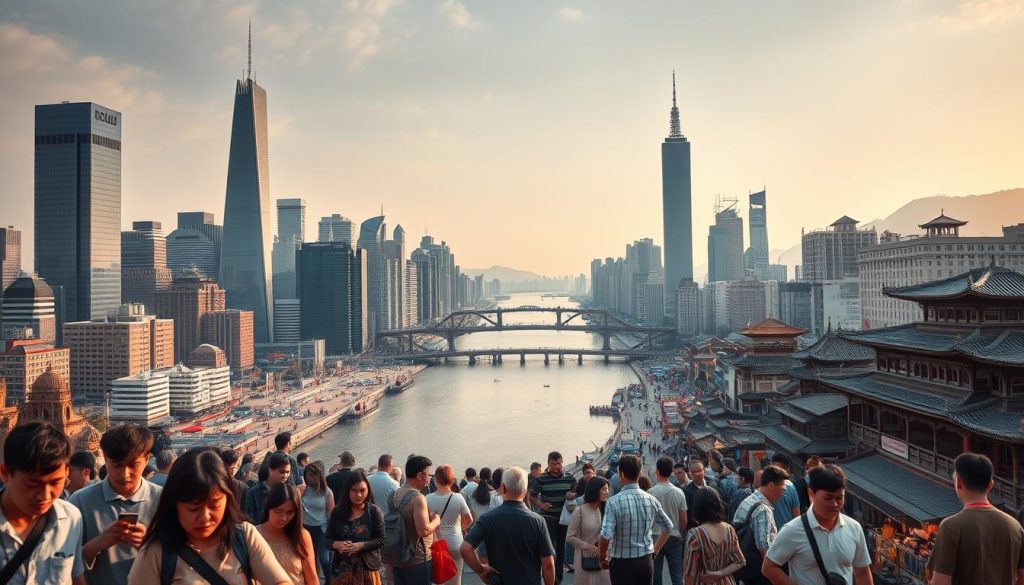
Western nations hold their Black Mirror fears close, like newborn dystopias. Eastern governments, on the other hand, roll out smart city tech quickly. A study shows Germans see AI as risky, while Chinese see it as full of opportunities. Your ZIP code might tell you more about your face-scanning fears than your horoscope.
Privacy Panic or Progress Paranoia?
America’s founding fathers didn’t think about AI when they wrote the Fourth Amendment. Our Puritan roots make us wary of big brother. Eastern countries, though, are building systems like those in Minority Report.
The Social Credit Score Specter
Winter isn’t coming – it’s already here, with facial recognition. China’s social experiment gets a lot of attention, but it’s not widely used. Yet, the idea of it makes Western libertarians very concerned. Both sides agree: the future is watching, whether we’re ready or not.
Sports Event Ticketing and Entry
Remember when losing your ticket meant begging security guards to check your face? Those days are gone. Now, sports ticketing tech uses digital scans for entry, no paper needed.
From Paper Stubs to Facial Passports
The Beijing Olympics showed us how to use tech for entry. Now, places like Shanghai and Taylor Swift’s tours use it too. It’s like a lab for improving the “fan experience”.
In Philadelphia, fans protested against new entry systems during the World Series. Eastern cities have smooth systems, but Western fans are hesitant. This tech does more than just check tickets; it collects valuable data.
When you enjoy easy entry, think about what it really means. Are we making venues better or just watching everyone? The answer could shape how we watch sports in the future.
User Impacts, Law, and Action Steps
Imagine your face as Monopoly money in a game where tech giants roll digital dice. You’re not just passing “Go” and collecting $200—you’re dodging false-positives that could land you in digital jail or watching corporations hoard your biometrics like Park Place hotels. Welcome to the privacy paradox of 2024: Your smile’s market value just surpassed your Social Security number.
Your Face as Currency: Navigating the New Normal
Europe’s playing regulatory chess with its AI Act (think GDPR’s angrier cousin), while China’s building surveillance infrastructure that makes Black Mirror look quaint. U.S. lawmakers are debating whether TikTok dances qualify as biometric data. Spoiler: Mark Zuckerberg’s meta-verse probably already has your eyelid twitch patterns cataloged.
Here’s your survival toolkit: VPNs aren’t just for streaming anymore—they’re facial recognition tools’ worst frenemies. And yes, Instagram contouring tutorials now compete with anti-surveillance makeup guides using IR-blocking pigments. Want to opt out? That’s cute. The real power move? Making your face-data so overpriced even Silicon Valley balks.
When Inkblots Become Mirrors
Facial recognition tools don’t just scan faces – they reflect cultural DNA. The West’s data privacy lawsuits and China’s subway smile-gates reveal more than technical debates. They show how Shanghai office workers and San Francisco activists see different worlds in the same algorithms.
Amazon’s Rekognition controversies and Alibaba’s City Brain successes form a modern Rorschach test. Detroit parents protest school cameras while Shenzhen commuters trade biometric data for faster rides. Neither approach is wrong – just different expressions of cultural evolution shaped by Confucian collectivism and Lockean individualism.
Imagine Edward Snowden debating Han Feizi over Tsingtao Beer. The surveillance critic and ancient legalist would agree on one thing: technology amplifies existing power structures. Europe’s GDPR regulations and China’s Social Credit System prove both sides weaponize face-scanning tech, just with different rulebooks.
The solution? Steal Berlin’s privacy playbook while borrowing Shanghai’s efficiency hacks. Use Apple’s on-device processing models with Alibaba’s crowd-flow optimization. Demand transparency like ACLU watchdogs while embracing convenience like WeChat Pay users. In this cultural divide, our smartphones become both prison guards and liberators.
Next time a store camera auto-completes your payment, remember: you’re not just buying gum. You’re voting for which version of 2030 gets built – one facial scan at a time. The most subversive response might be flashing your best awkward smile, proving humans are more unpredictable than machines.