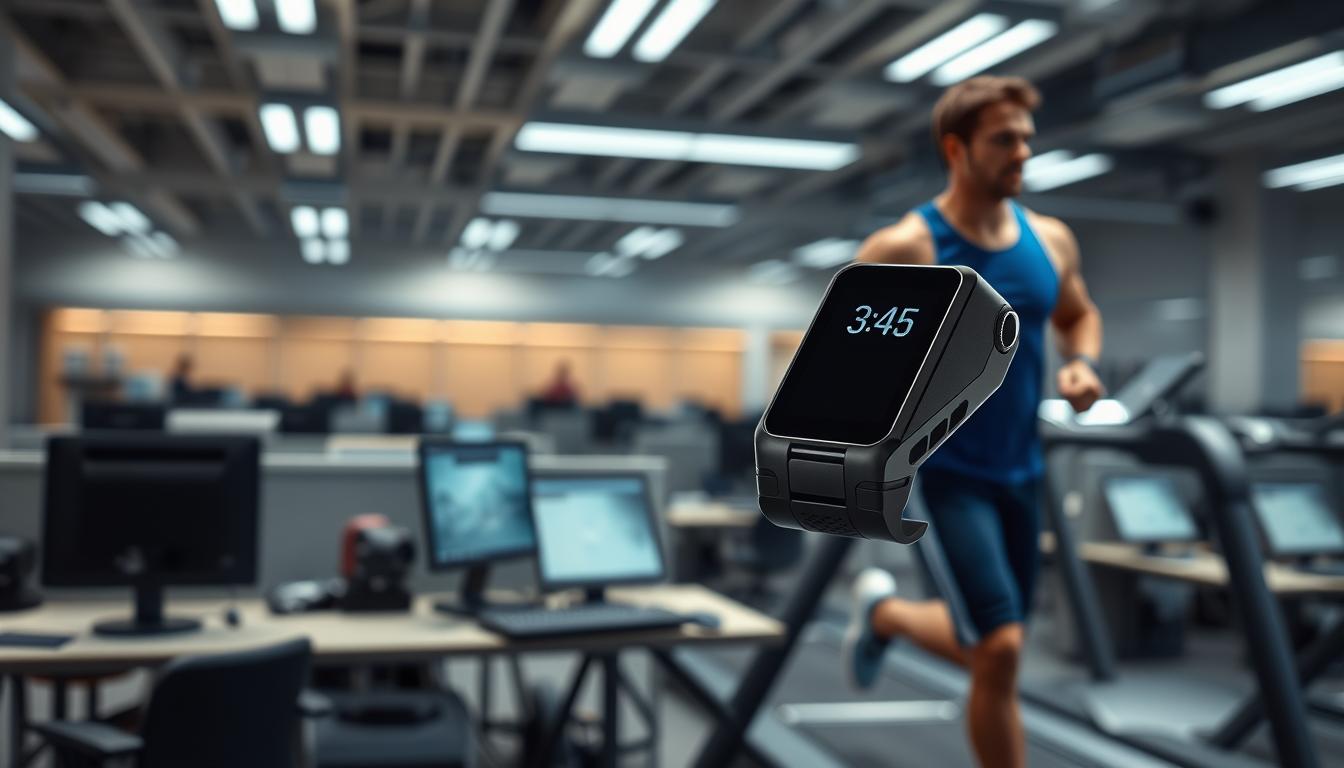
Imagine wearing a device that tells your boss how you feel. For Beijing bus drivers, this is their daily reality. Over 20,000 transport workers wear biometric wristbands to track their stress levels.
The idea is to prevent accidents by watching for signs of tiredness. But these devices are like telescreens you volunteer to wear. HR teams check the data. One driver said, “It beeps if I yawn too much.”
This shows how treating human biology as a glitch is common. Most devices just track basic things like heart rate, not emotions. The gap between what’s promised and what’s real is huge.
But when we mix work performance with heart rate, where do we draw the line? Is it about safety, or is it about control?
Who needs the Ministry of Love when you’ve got middle managers cross-referencing step counts with productivity reports? China’s factories and stadiums are using similar technology. We’re left wondering: Is that wristband a tool for wellness, or a way to keep people in line?
Tech Features & How They Work
Your fitness tracker has turned against you. It used to just count your steps. Now, it spies on you, sending your heart rate to the boss.
From Smartwatch to Snitch: The Anatomy of Surveillance Wearables
Modern surveillance wearables look harmless but are actually spies. Let’s look at a Chinese model:
| Feature | Apple Watch | Surveillance Model |
|---|---|---|
| Heart Rate Monitoring | Fitness goals | Emotional compliance scoring |
| Blood Oxygen Sensor | Altitude adjustment | Stress level detection |
| Accelerometer | Step counting | Workstation loitering alerts |
Biometric Puppeteers: How Algorithms “Interpret” Your Vital Signs
Here’s where tech meets fake science. These devices claim to read emotions through:
- Heart rate variability = “Hostility index”
- Perspiration levels = “Work ethic meter”
- Sleep patterns = “Corporate loyalty score”
It’s like phrenology, but with better marketing and Bluetooth 5.0. As safety guidelines for wearable tech try to keep up, employers judge workers based on weak science.
Your smartwatch now checks if you’re standing up enough. If you miss your steps, it’s not just a health alert. It’s a mark against you at work. The future of monitoring is here, on your wrist.
From Work Hours to Sports Teams: Who’s Watching?
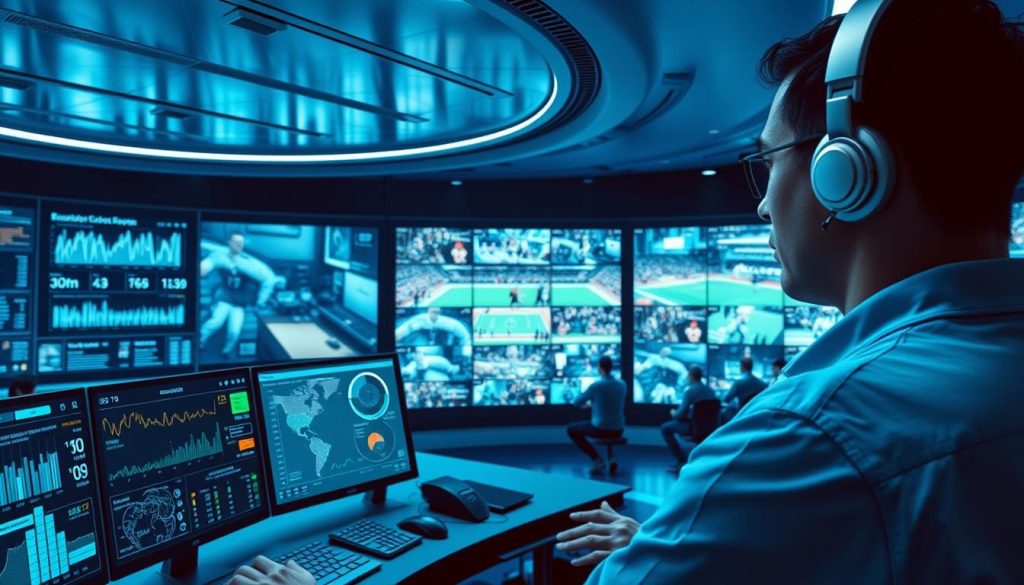
Imagine a world where your fitness tracker reports your bathroom breaks to management. In China’s tech-powered surveillance ecosystem, that world is already here. The same wristband that counts your steps at Beijing’s Olympic Stadium might dock your pay at a Shenzhen factory. Welcome to surveillance capitalism’s latest upgrade – where workplace monitoring and sports coach oversight share the same playbook.
Factory Floors and Soccer Fields: The New Surveillance Frontier
Amazon’s warehouse wristbands track hand movements to “optimize” packing speeds. Beijing subway workers wear smartwatches that alert supervisors if heart rates dip below “productive” thresholds. But here’s the twist: The same tech turning factory workers into algorithms now trains Olympic athletes.
Youth soccer coaches in Shanghai receive player analytics so granular, they make Moneyball stats look like cave paintings. One training program cited in family studies even tracks teenagers’ sleep patterns and cortisol levels. “We’re not coaching humans anymore,” a Guangzhou academy director told me. “We’re debugging biological hardware.”
Productivity Policing: When Your Boss Knows Your Heart Rate Better Than Your Spouse
At a Foxconn factory, workers’ smartwatches buzz when their stress biomarkers suggest “decreased focus.” Managers receive real-time dashboards ranking employees by “physiological engagement.” In California warehouses, similar systems penalize workers for “micro-breaks” detected through sweat gland activity.
The crossover into sports is where things get ethically murky. College swim teams now use recovery metrics to bench athletes before competitions. Youth coaches bench players whose sleep data shows “insufficient dedication.” Is optimizing a warehouse picker’s movements fundamentally different from tweaking a linebacker’s stance when both use the same invasive tech?
Consider this: The algorithm that flags a factory worker’s “lazy” heartbeat could simultaneously diagnose an athlete’s overtraining syndrome. Who benefits when surveillance tools moonlight as health aids? The answer might determine whether we’re building Black Mirror dystopias or Olympic training centers – or both.
Privacy, Ethics & Social Debate
Imagine your fitness tracker acting as a corporate spy. This is the strange world of surveillance wearables. They are both tools for personal improvement and tools for watching you, causing big debates.
Thoughtcrime 2.0: When Bad Moods Become HR Violations
Beijing delivery driver Wang Lei found out how monitoring can turn into judging your feelings. His smartwatch showed three “aggression spikes” during fights with drivers. “I didn’t punch anyone,” he said. “My wrist just… disagreed with my heartbeat.”
Dr. Ming Zhao says it’s like China’s social credit system. “We’ve moved from scoring financial behavior to judging our thoughts. Soon, they’ll deduct points for crying during propaganda.” This raises big questions about work and feelings.
The Quantified Self vs. The Surveilled Soul
In Silicon Valley, people track themselves for personal growth. But in China, workers face a harsh reality:
| Quantified Self Movement | Surveillance Wearables |
|---|---|
| Voluntary participation | Mandatory compliance |
| Focus on personal growth | Focus on corporate control |
| Data ownership: Individual | Data ownership: Employer/State |
| Goal: Self-improvement | Goal: Behavioral compliance |
In the West, like Amazon’s “productivity bands,” there are similar tracking systems. But China’s mix of tech and social control is different. Reddit users joked: “Your Apple Watch tells you to stand up. Their wearables tell you to shut up.”
The biggest twist? These systems make workers self-censor. Factory workers do “emotional Tai Chi” and fake smiles during long hours. It’s like a mix of work and acting in a bad sci-fi movie.
Data Use, Law, and Company Policy
Imagine a world where your resting heart rate is owned by your employer. Welcome to China, where workplace surveillance wearables have a lot of room to operate. This is a place where corporate interests, old laws, and biometric data collection mix in a complex way.

Legal Loopholes in the Algorithmic Age
In 2023, Beijing made a big decision. A worker sued over heart rate monitoring, but lost because it was seen as helping productivity. In Europe, GDPR gives people more control over their fitness tracker data than workers in China have over their heart rates.
Companies have a simple plan:
- Make biometric data part of work contracts
- Use fitness tracker apps to avoid health privacy laws
- Say algorithmic firings are about performance, not bias
Your Pulse as Corporate Property: Who Owns Biometric Data?
In China, your smartwatch can be seen as a tool for the company. Labor laws treat biodata like factory equipment. But in California, workers can ask for their health data to be deleted. Most big companies have stricter privacy rules in Europe than in Asia.
| Region | Biometric Data Rights | Enforcement Teeth |
|---|---|---|
| China | Employer-owned | Paper tiger regulators |
| EU | Employee-controlled | GDPR fines up to 4% revenue |
| USA | Patchwork state laws | Class action lottery system |
The biggest irony is that tech CEOs fly in private jets with biometric security. Yet, their factories use workplace surveillance wearables to monitor workers. A Shenzhen factory manager said they track electrical signals, not moods. Is this progress?
The Future of Wearables
Imagine a world where your smartwatch tracks your thoughts. Biometric sensors are getting smaller, leading to two paths. One is Tony Stark-style neural upgrades, the other is dystopian employee collars. Now, 63% of families use wearables for health monitoring. But what if this tech starts to monitor our brainwaves?
Neural Lace or Electronic Leash? Two Paths Forward
The sports tech world is racing ahead. A report suggests future athletes might be biometrically optimized from birth. Soccer coaches already use trackers to check players’ fitness. Will future sports coach oversight systems analyze brain signals to predict scores?
Think about the two sides of this technology:
| Augmented Humanity | Corporate Control |
|---|---|
| Real-time injury prevention alerts | Productivity metrics tied to heart rate zones |
| Customized cognitive enhancement programs | Social credit scores based on sleep patterns |
| Democratized access to elite training data | Algorithmic punishment for “low engagement” days |
Augmented Humanity vs. Corporate Control
The AI that finds heart problems in athletes could also spot union organizing tendencies in workers. Wearables meant to help recovery might suggest “mandatory mindfulness sessions” for stress. We’re creating systems that save lives but also threaten our freedom.
Will wearables empower us, or just make us better-behaved livestock in Amazon’s high-tech fields? It all depends on who controls the off switch. And if we’ll have fingers left to press it.
Conclusion
Beijing’s experiment with surveillance wearables shows a global truth. We’re creating panopticons, one fitness tracker at a time. Tech that tracks steps in San Francisco also watches assembly line work in Shenzhen.
Workplace surveillance wearables are spreading fast. They go from Amazon warehouses to Premier League locker rooms. Black Mirror’s fiction is now our reality, with automatic billing.
China’s biometric soccer tags and mood-sensing smartwatches are not unique. They test how much freedom we’ll give up for convenience. Huawei’s employee monitors and Alibaba’s meeting room sensors show what’s considered “good” work.
Privacy is now as thin as a smartwatch band. Legal systems struggle to keep up with algorithms that redefine consent. We’re making surveillance seem inevitable, not invasive.
Dystopia isn’t set in stone. Tokyo banned emotion-tracking office wearables last year. Germany’s courts have fined companies for using productivity-monitoring apps.
The tools themselves are neutral. It’s our choices that give them power. Will we protect human dignity, or let tech control us?
So, if our grandchildren ask about privacy’s demise, will we blame “progress”? Or will we say we stopped questioning who programmed it? The future belongs to those who watch the watchers, before their Fitbit betrays them.