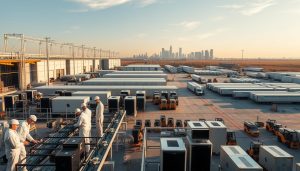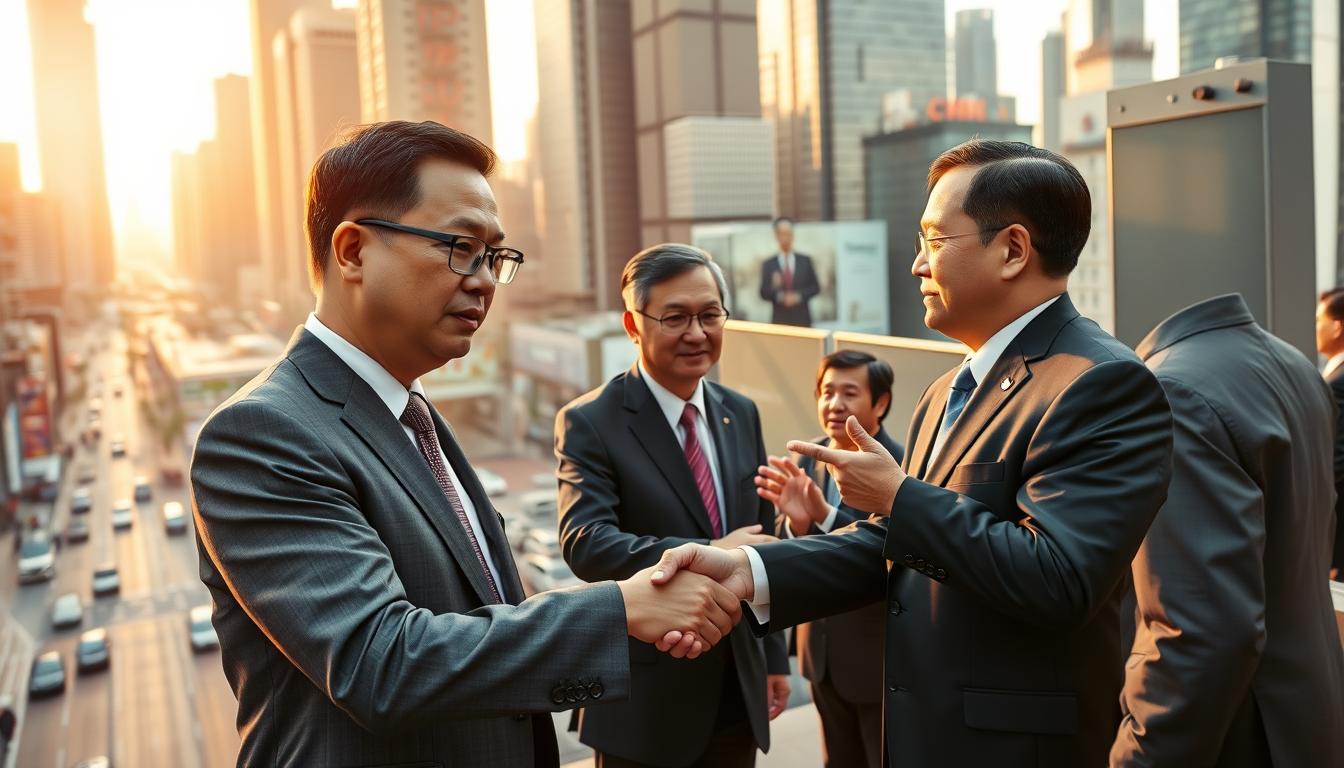
Remember when Tony Stark built a high-tech suit in a cave? Now imagine 18,000 Chinese companies turning factories into production lines during a pandemic. That’s what happened in early 2020, thanks to China’s government response. It was like an Avengers team-up, with officials guiding corporate giants.
This wasn’t just a simple partnership. Automaker BYD quickly shifted from making cars to ventilators. Mask production jumped 12-fold in just 30 days. But was this a true partnership or more like a forced team-up? The answer is a mix of both, blending old-school politics with modern tech.
China used military strategies to manage its supply chains. Factories became key battlefields. CEOs acted as logistics experts. But, there were hidden tensions, like the difference between corporate goals and state-controlled plans.
We’re going to explore if this was a real partnership or just a show. Can forced team-ups between business and government really succeed? And what happens when the crisis is over? Do these alliances fall apart like spring rain on face masks?
State Enters the Business Arena
When China’s leaders hit Ctrl+Alt+Del on their economy in early 2020, factories rebooted. They turned into PPE-producing powerhouses. This wasn’t your grandma’s five-year plan. It was crisis logistics on steroids, with the state leading the way.
The numbers show the impact: 92% surge in mask production in weeks, state data says. This was the Great Mask Mobilization. It was a digital-age twist on collective farming.
- 🧻 Tissue manufacturers switched to nose wires
- 🚗 Auto plants retooled for face shields
- 📱 Foxconn added N95s to its iPhone assembly lines
Chinese media called it “human flesh big data” logistics. It was a system where workers solved supply chain problems in real time. Imagine Amazon’s delivery network, but with twice the urgency and 10 times the party cadres.
The real magic happened in those first 72 hours. When Washington was debating ventilators, Shanghai quickly converted factories. One electronics plant changed from circuit boards to surgical masks in three days flat.
Compare this to the U.S. approach, where states bid against each other. While New York paid $7 per mask through shady brokers, Wuhan had 3,500 enterprises working together. China’s government treated businesses as extensions of the state, not separate entities.
This was crisis fusion cuisine. It was a mix of command economy and Silicon Valley hackathon. Local officials acted as both drill sergeants and venture capitalists. The result was a manufacturing moonshot that makes Elon Musk’s Tesla ramp-up look like amateur hour.
Coordinated Economic & Health Response
China’s health code system is like something out of dystopian fiction. Imagine your Uber driver checking your health code. Tencent and Alibaba turned contact tracing into a loyalty program. It was a mix of public health and corporate data, making Mark Zuckerberg jealous.
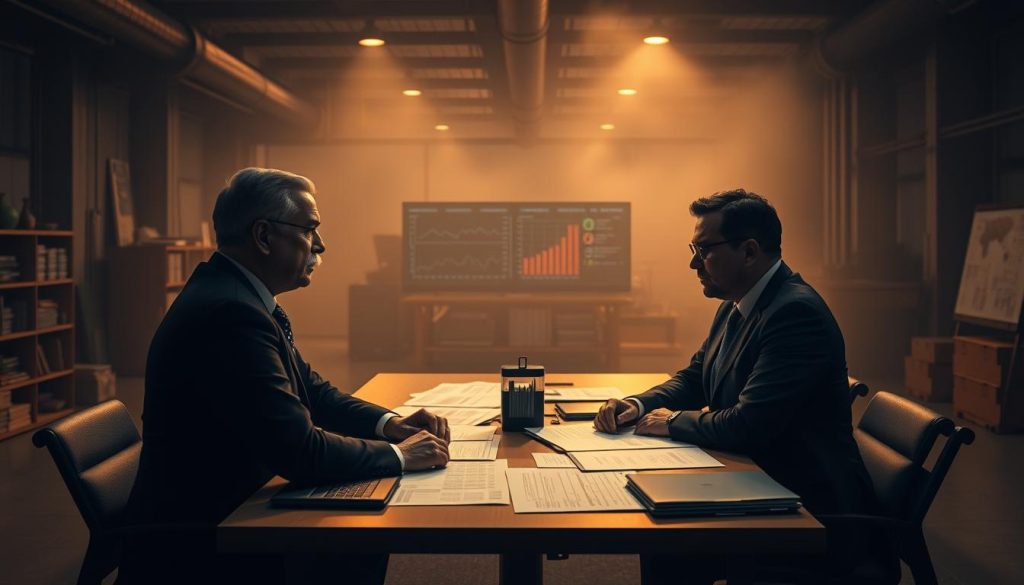
Alibaba’s DingTalk checked 1.5 billion health codes daily. Tencent’s WeChat codes controlled 900 million phones. Neighborhood committees checked codes like bouncers at a club. Military logistics were used for lockdowns, showing how similar moving missiles and PCR tests are.
Three key parts made this system work:
- Tech giants helped with public health (getting user data)
- Local cadres enforced app rules
- Didi drivers helped with pandemic supplies
UN health reforms didn’t see this coming. China used personal data for good, making corporate profits. Alibaba’s health codes tracked infections and consumer habits, outsmarting Amazon.
The best part? Didi’s algorithms now help with vaccine distribution. When your food delivery checks your temperature, you’re in a unique place. It’s either socialist utopia or the most efficient surveillance capitalism.
Impact: Manufacturing, Logistics, and Sports Events
If COVID-19 were a basketball game, China’s industrial sectors just played three quarters of Survivor: Supply Chain Edition. Let’s break down the scoreboard where pandemic disruptions met corporate Hail Mary passes.
The Wuhan lockdown didn’t just pause factories—it birthed maritime zombies. According to CENJOWS analysis, over 350 container ships became floating warehouses off Shanghai, their cargo trapped like Schrödinger’s cat—both delivered and undelivered. Global retailers stared at these crisis logistics nightmares, wondering if their sneakers would arrive before the next Olympics.
Sports sponsorships took a body check worse than an NHL enforcer’s fistfight:
| Sector | Pre-COVID Playbook | Pandemic Reality |
|---|---|---|
| Manufacturing | Just-in-time production | Just-in-case stockpiles (Anta hoarded 2M Olympic jackets) |
| Logistics | 72-hour global delivery | 72-day maritime limbo |
| Sports Events | Evergrande’s $185M football empire | Bankruptcy filings & empty stadiums |
Who knew empty arenas would become supply chain heroes? The UN’s infrastructure goals got a backdoor boost as China repurposed 38 sports venues into temporary medical supply hubs. Talk about a halftime pivot—stadiums designed for cheering crowds now echoed with forklifts loading PPE.
Yet not every player nailed the dismount. Evergrande’s soccer team collapse revealed the dark side of sports-industrial complex math: when sponsorship dollars vanish faster than a halftime beer vendor, even billionaire owners get benched. Zombie ships kept haunting trade routes like bad remixes of Ghost Ship—a floating testament to crisis logistics gone sideways.
The Alibaba Example
Imagine a delivery app backed by the Party – Alibaba’s Green Channel was a pandemic hero in China. It started as Jack Ma’s digital flea market. Then, it grew into a huge logistical network during COVID-19.
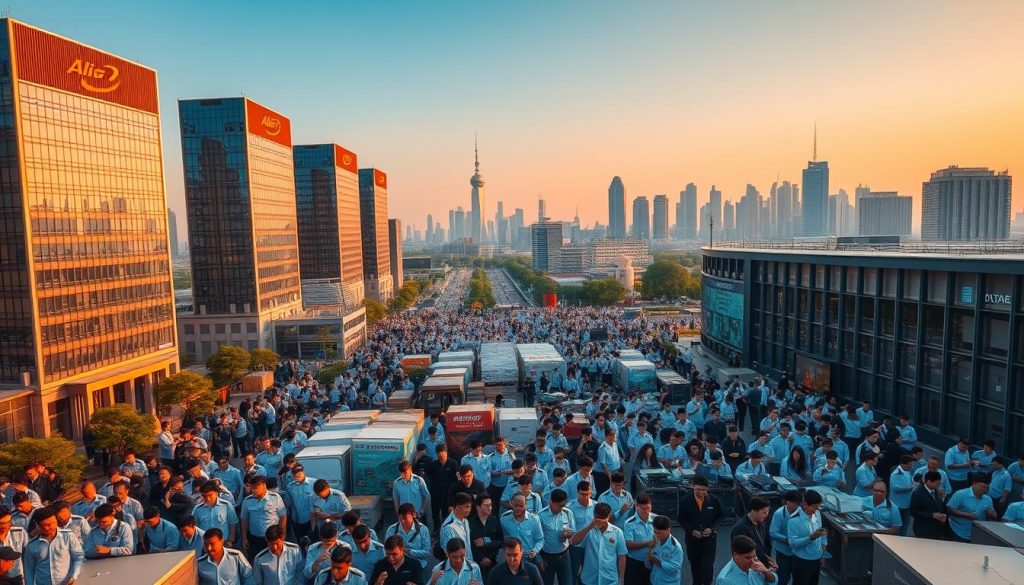
Alibaba’s entire ecosystem was the real magic. Taobao sellers helped find PPE. Alibaba Cloud tracked outbreaks. Even grocery trucks delivered vaccines.
This was more than just helping out. It was a lesson in crisis capitalism.
Here are some numbers that made Beijing happy:
| Metric | Pre-Pandemic | COVID Peak | Gov’t Partnerships |
|---|---|---|---|
| Medical Deliveries | 0 | 260M+ items | 12 Ministries |
| Cold Chain Coverage | 15 Cities | 2,800 Counties | National Priority |
| Vaccine Tracking | N/A | 100% Traceability | Health Code Integration |
The Green Channel worked because of Alibaba’s smart logistics. While FedEx waited, Cainiao trucks got special access. This came with a price – like Xi Jinping banners on apps.
Alibaba’s vaccine deliveries made it a monopoly. Western companies debated ethics, but Ma’s empire moved forward. Alibaba now controls 62% of China’s cold chain logistics.
This move set a new standard. Can Jeff Bezos compete with Alibaba’s national security role? Alibaba showed that being the Party’s favorite can be a winning strategy in China.
What Worked and What Didn’t
China’s pandemic plan was like a high-stakes poker game. Wuhan Speed was its ace, but rural clinics showed a hidden card. The government’s response showed both the power of quick action and the dangers of uneven resources. Let’s look at the successes and failures.
What clicked: Beijing’s quick planning was impressive. The 1,000-bed Huoshenshan Hospital was built in just 10 days. Centralized buying turned factories into PPE factories, increasing mask production from 10 million to 116 million daily in two months.
But, for every success story, there was a village clinic struggling. Rural areas were underfunded and understaffed. They were far behind the high-tech surveillance systems in cities.
| Successes | Challenges | Lessons Learned |
|---|---|---|
| Rapid hospital construction | Rural healthcare gaps | Centralization ≠ universal coverage |
| Strategic factory conversions | Supply chain bottlenecks | Agility requires redundancy |
| Digital contact tracing | Privacy concerns | Tech solutions need public buy-in |
The military-style logistics praised in CENJOWS analysis worked well… until they didn’t. The ‘digital fences’ were great for tracking people in cities. But they were useless for migrant workers returning to villages without smartphones.
Here’s the main point: China could build hospitals fast, but it couldn’t fix rural healthcare problems. The pandemic showed that quick action can’t solve long-standing issues. The same system that made masks quickly struggled to send vitamin C tablets to Hebei province.
Outlook for State-Business Models
Is China’s partnership between the government and tech companies ending, or starting a new chapter? The “dual circulation” policy shows a mix of local innovation and global goals. It’s like a blend of TikTok and the Five-Year Plan, with state-owned enterprises and tech companies working together.
UN 2025 goals show China’s “red supply chains” might become a global standard. When Tesla builds its “Gigafactory Shanghai” with state help, is Elon Musk becoming like Huawei? The numbers suggest yes, with China aiming for 40% of global EV battery production by 2026.
But can this partnership last in peace time? Three key factors will decide:
- Tech compliance: Will Alibaba-style “rectification campaigns” become standard for foreign firms?
- Data sovereignty: How will Beijing’s cybersecurity laws work with Silicon Valley’s fast-and-break approach?
- Market access: Does “dual circulation” give foreign companies VIP treatment or make them second-class citizens?
The real test is how China uses its pandemic playbook in 2025. If “red supply chains” deliver green tech, Western CEOs might ask: “Can you teach an old market economy new socialist tricks?”
But the model has its flaws. CENJOWS points out risks of innovation slowdown due to state control. Imagine Apple focusing on patriotic emojis over profits. For every success like DJI drones, there’s a cautionary tale like Evergrande.
As the world debates decoupling or cooperation, China’s hybrid model offers a unique option. The question is, will the world follow China’s lead or create its own path?
Conclusion
China’s state-business COVID coordination was a unique mix. It was like a dragon and a delivery van combined. The pandemic response was like a reality show, with Tencent making contact-tracing apps quickly. Factories also changed fast, moving from sneakers to ventilators.
A recent PMC study mapping 77 corporate shows this wasn’t just policy. It was a well-coordinated industrial effort.
The magic was in making “Marxist capitalism” sound appealing. During lockdowns, Didi drivers quickly became medicine couriers. But the big question is: Can this partnership last after the pandemic?
Alibaba’s story shows the paradox. Jack Ma’s empire gave out masks while taking part in government-approved seminars. It’s like a mix of 1984 and Shark Tank, with extra social credit points.
This model worked during the pandemic. But in normal times, solo artists are preferred over groups. America’s supply chains are struggling, and China’s approach offers lessons.
Effective crisis response might need a mix of Walmart efficiency and KGB oversight. The real impact of this coordination is yet to be seen. Will the party let businesses keep their VIP status in the next crisis?