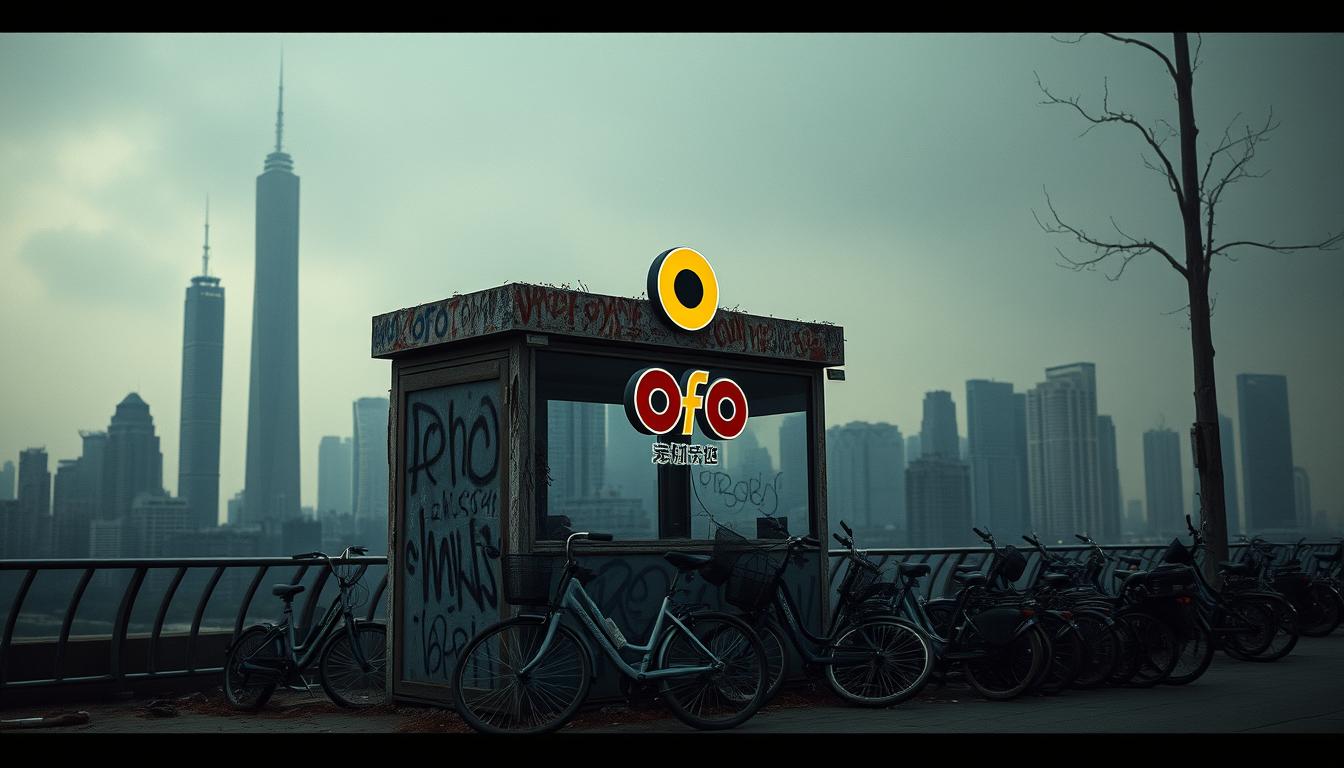
Remember when yellow bicycles promised to change city travel? By 2019, that dream turned into a nightmare. Ten million users were left without their money back, stuck in a digital void. The mobility startup’s servers went down, marking a huge failure for China’s tech world.
Wei Shijie’s GQ Report analysis sheds light on this disaster. It’s like Churchill planning D-Day, but with bikes instead of troops. Ofo’s Victory Plan aimed to please Alibaba’s board, but it failed miserably. The only winners were scrap-metal sellers.
What happens when investors fund 20 million bikes for cities needing 2 million? Cities are now filled with rusting bikes, like modern art. Tencent and Alibaba fought their battles on city streets, with their bikes as soldiers.
Do you hear the sound of 10,000 electronic locks fading away? This story warns of the dangers of growing too fast. Even with a $3B value, human greed can outpace innovation. So, let’s explore the wreckage where dreams met reality.
The Bike-Sharing Boom
Do you remember when Chinese campuses were covered in yellow bikes? This was the start of a big change in urban transportation. In 2016, students at Peking University saw a chance to make money. They thought 5 mao (7¢) rides could change cities fast.
From Campus Experiment to Urban Revolution
The idea was simple: 10 rides a day at 75¢ each made $7.50. Even old bikes could earn more than a Shanghai barista. Investors were excited, adding 12 million bikes by 2017. The streets became filled with Warholian installations of bikes, cheaper than a Starbucks latte.
Three numbers show the excitement:
- 16,000,000 bikes ordered – enough to circle the equator 1.5 times
- $1.28B in funding – more than Bolivia’s GDP
- 20RMB mechanical locks – the Achilles’ heel wrapped in QR codes
But there was a problem. Engineers forgot bikes need upkeep, unlike digital items. The “growth at all costs” model failed as cities became messy.
At first, urban planners were happy. They thought bike sharing solved many problems. But soon, cities faced big issues. Bikes clogged rivers, caused parking chaos, and didn’t make money.
Ofo’s Rise and Decline
Imagine a mobility startup that views bikes like disposable chopsticks. In 2017, Ofo’s yellow bikes took over Chinese cities fast. They focused on making lots of bikes, not making them last.
The $7.2B Procurement Spree
Ofo bought 12 million bikes in five months. That’s enough to circle the Earth’s equator 1.8 times. But, their bikes were cheaper than Mobike’s, costing 30% less.
A former engineer said, “We built bicycles like IKEA furniture – cheap, cheerful, and prone to wobbling.”
Hardware Hubris
Problems emerged fast. Of those 12 million bikes, 1.5 million had broken smart locks. Mobike’s bikes, though more expensive, are doing well today. They’re like the Toyota Corollas of micro-mobility.
| Metric | Ofo | Mobike |
|---|---|---|
| Bike Cost (RMB) | 300 | 3,000 |
| Smart Lock Defects | 12.5% | 0.8% |
| Procurement Scale (2017) | 2.4M/month | 800K/month |
| Avg. Durability | 4 months | 18 months |
Ofo’s leaders made two big mistakes:
- They thought Chinese people wouldn’t mind cheap bikes.
- They believed software could fix bad engineering.
By 2018, fixing bikes cost 40% of their revenue. Ofo became a lesson in what not to do in micro-mobility. A VC said, “You can’t outgrow physics.”
Micro-Mobility in Sports and Urban Life
Beijing’s streets turned into seas of yellow Ofo bikes. It was more than just urban transportation. It was a fitness revolution in disguise. People were dodging bankruptcy while getting fit.
Pedal-Powered Fitness Trends
Ofo’s 15 million users turned lunch breaks into fitness challenges. For 25¢, you could choose a steamed bun or a 30-minute workout. The choice was clear for China’s office workers.
- Commute-ercise: 42% of users paired rides with WeRun step tracking
- Didi integration: Fitness metrics synced with ride-hailing app by 2018
- Selfie economics: 68% increase in bike+face photos during Beijing Marathon months
Marathoners to Weekend Warriors
Ofo bikes became a social status symbol. Your sweaty helmet hair was the new cool. Here’s a look at the different types of users:
| User Type | Weekly Rides | Avg. Distance | Social Posts |
|---|---|---|---|
| Marathon trainees | 14 | 38km | 9.2 |
| Weekend warriors | 3 | 12km | 4.7 |
| “Accidental athletes” | 7 | 22km | 6.1 |
The “accidental athletes” found fitness in their commute. They used Ofo for quick workouts during rush hour. It was like having a personal trainer in the city.
The bikes became mobile gyms. Commutes were workouts, and evening rides were stress relief. And if it didn’t make it to WeChat Moments, did it even count?
Competition with Mobike and Didi
China’s bike-sharing wars were like nothing seen before. At the heart was Ofo, caught in a battle between Alibaba’s Jack Ma, Didi’s Cheng Wei, and Tencent’s Pony Ma. The fight was over a $1.8 billion SoftBank deal that could save Ofo, but only if everyone agreed on who would pay.
The Veto Rights Showdown
Alibaba’s veto power was Ofo’s biggest problem. When SoftBank offered to invest in 2018, Jack Ma’s team said no. They didn’t want to lose control and let Didi gain more power. Our source said it was like trying to teach quantum physics to a dog – all excitement, no understanding.
The damage was huge:
- Didi executives left meetings like “human tornadoes” of papers
- Ofo’s value plummeted like a phone battery in cold weather
- Money for bike maintenance vanished, leaving bikes as rusted relics of a failed startup
This stalemate showed the dark side of China’s tech world. Tencent used WeChat to help Mobike grow, but Alibaba froze Ofo’s funds. This led to a disaster where 16 million bikes were left in Chinese cities. It was like a tech version of burning couches on Stanford’s quad.
Ofo’s biggest mistake was thinking they could play the big tech companies against each other. In China’s tech world, there are only winners and losers.
The Company’s Survival Plan
When cash runs out fast, you get creative. Ofo’s survival plan is like Elizabeth Holmes’ big promise to change blood testing. They mixed desperation with fancy math, making Enron’s numbers look simple.
Debt-for-Equity Gambits
Imagine asking your Uber driver to share the car instead of paying. That’s what Ofo did in 2020. They offered to give up parts of the company to settle $2.3B in debts. It was a move as unpopular as pineapple on pizza at a Neapolitan summit.
- Bicycle makers wanted real money, not IOUs
- Alibaba’s Ant Group offered silence instead
- 500 employees started WeChat groups called “Exit Strategies & Memes”
Ads Before Unlocks
Showing 15-second ads before you can unlock bikes? It was a bold move. Ofo made $15M from it, enough to buy a small part of a bike from 2017. Users were not happy, giving the app 1-star reviews.
- Users called it “Netflix for bikes” but worse
- They found out shaking phones could skip ads
- They learned stationary bikes don’t have ads
The biggest irony? These ads promoted competing micro-mobility apps. It’s like Blockbuster selling tickets to Netflix’s IPO party. A self-own for the history books.
Rider Stories (Fitness, Commute, Events)
China’s bike-sharing graveyard is more than just old bikes. It’s a window into the past. Office workers now explore this graveyard, becoming “bike archaeologists”. Students search for working bikes, like finding Pokémon.
And then there’s Grandma Liu, who became famous for breaking locks with mahjong tiles. Her actions sparked a wave of bike-related chaos.

Broken Bikes & Broken Promises
What’s sad is the ¥199 deposits ($28) that are lost forever. Ten million users are stuck, waiting for refunds. They face a digital wall, with customer service robots quoting Confucius.
The bikes themselves cry out, with error alerts blaring. It’s like they’re mourning their fate.
There are three stages of grief for cycling:
- Ambition: “I’ll bike to work daily – eco-friendly cardio!”
- Reality: Hunting functional bikes like a post-apocalyptic scavenger
- Despair: Realizing your deposit now funds Ofo’s legal team’s coffee budget
Urban commuters learned a hard lesson. Bike-sharing is like a Ponzi scheme. When maintenance teams disappear, riders must fix bikes themselves.
But cycling for fitness keeps going. Riders face challenges but keep going. They even use Ofo seats as yoga mats. That’s true innovation.
Lessons for Urban Tech
China’s bike-sharing graveyard is more than just a pile of old bikes. It’s a lesson in business failure, written in rust. We can learn a lot from this mobility startup disaster. What went wrong? Too much pride, bad weather, and poor money management.
5 Darwinian Truths for Surviving China’s Thunderdome
- Deposit money isn’t revenue – it’s a Class Action lawsuit doing handstands in a legal library. Ofo’s $300M in user deposits? Gone faster than a Shanghai summer.
- Hardware eats software for breakfast when typhoons hit. Those $30 bikes rusting in Suzhou canals? A $4B reminder that urban transportation needs military-grade engineering.
- When Tencent invites you to WeChat, bring mints *and* kneepads. Mobike’s integration vs Ofo’s “independence”? One became Meituan’s $2.7B toy, the other became scrap metal.
- $1B warchests last 5 months in China’s bike-sharing Thunderdome. Didi burned $600M in 90 days – that’s $6,667 per minute. Even Scrooge McDuck would blush.
- Your “unique model” gets cloned before your Series B champagne goes flat. Ctrip vs Elong’s 14-year hotel war proves: In China, IP stands for “Immediately Pirated.”
Meituan’s $4B annual losses show a harsh truth about urban transportation startups. Making money per ride is key, not just getting VC money. If your costs are higher than your income, you’re in trouble.
The real lesson? China’s market is tough. It doesn’t just eat the weak – it also eats the ambitious. Next time someone talks about a “asset-light mobility play,” ask: “Can it survive a month in Shenzhen’s rainy season?” If not, keep your wallet closed and your lawyers ready.
Conclusion
Ofo China’s yellow bikes now gather dust in parking lots. But the real story is not about their demise. It’s about what new things will grow from the cracks in the pavement.
Phoenix or Fossil?
Alibaba’s HelloBike and Didi’s Green Orange are now leading the way in China. They show that money always finds new opportunities. Meituan’s buyout of Mobike highlights how bike sharing became a game in the tech world.
Ofo’s big spending didn’t fail. It helped create better ways to move around. Riders are moving on, but now they care about their health and the planet.
The deposit crisis taught China a hard lesson. It showed that innovation needs to be responsible. Every failure, from shared umbrellas to battery swaps, helps the next big leap forward.
Was Ofo a phoenix or just a warning sign for fast-growing tech? Its story teaches us that making money is more important than looking good. As e-scooters spread worldwide, China’s bike-sharing wars are far from over. They’ve just evolved.
When the next big bike-sharing crisis comes, will your ride disappear? Always read the fine print and maybe wear comfortable shoes.