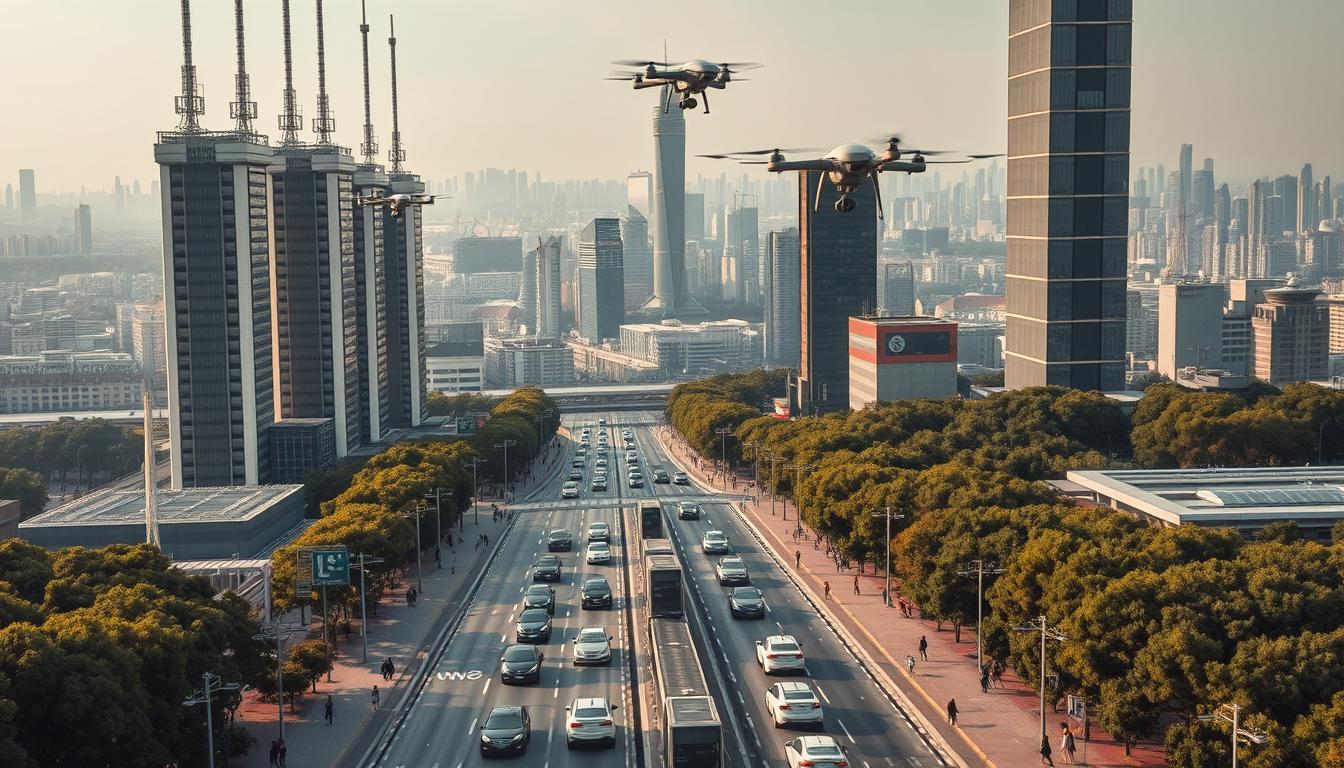
Imagine Shanghai’s skyline, full of skyscrapers where wireless signals are more common than smog. China has built over 350,000 next-gen network towers, more than 10 times the U.S. total. They’ve turned cities into hubs of super-fast internet.
In the U.S., telecom companies fight it out in 20 cities. But Beijing is like a state-sponsored Marvel movie. They’ve used subsidies and Huawei’s affordable tech to spend $24 billion. This has made their towers so dense, you can bounce a signal between noodle shops without losing any data.
This isn’t just about faster internet. It’s about using tech as soft power to build smart cities and run autonomous buses. When your subway downloads faster than a Congressional hearing, you’re leading the tech race. The real question is, “What happens when Manhattan feels left behind?”
Rollout Timeline, Real-World Use Cases
China’s 5G rollout was like a TikTok trend, fast and furious. While others debated, Beijing jumped ahead by a year. This led to a network expansion that’s almost like a digital explosion.
From Pilot Programs to Ubiquitous Coverage
Shenzhen’s transformation is a prime example. It was once a factory hub, now it’s a 5G testbed. Here, you’ll find:
- Traffic lights negotiate with self-driving buses in a snap
- Subway stations show 8K holographic ads, a step up from regular ads
- Emergency services get health data from smartwatches before you even dial 911
This isn’t just tech—it’s a digital evolution. By 2022, Beijing’s Olympics saw athletes in arenas with 5G-powered snowmaking systems. That’s a big leap from Vancouver 2010.
Smart Cities Get Smarter
Hangzhou’s “social credit sidewalks” show China’s mix of tech and watchfulness. Jaywalk, and cameras:
- Spot you with 5G AI
- Calculate your fine with location data
- Send a payment link to your phone before you hit the curb
Chengdu’s panda base also got a tech boost. The bamboo buffet now has 5G-enabled feeding robots that track bear health. It’s a new way to say “we care” about conservation.
Sports Streaming/Esports Improvements
Imagine your livestream freezing just as the goalie blocks the penalty kick. It’s like your Wi-Fi router betraying you at the climax of a Shakespearean play. China’s 5G rollout is fixing this digital heartbreak. It’s changing how we watch sports and esports.
The 2022 Winter Olympics showed us 8K streams with low latency. But, viewers only saw the CCP-approved angles.
Buffering Becomes Ancient History
Tencent’s esports arenas are like digital colosseums. Lag kills careers faster than a rookie’s misclick. Their 5G platforms handle 20 million viewers with little delay.
Western platforms can’t compare:
| Platform | Avg. Latency | Max Concurrent Viewers | Content Moderation |
|---|---|---|---|
| Tencent Arena | 8ms | 20M | State-curated replays |
| Twitch | 45ms | 12M | Community guidelines |
| YouTube Gaming | 60ms | 8M | Algorithmic filters |

Alibaba’s ‘Cloud Olympics’ showed you don’t need a $10,000 TV. Their 5G mobile streams achieved:
- 4K resolution at 120fps on $200 smartphones
- 360° camera angles (state-approved, naturally)
- Real-time betting integration with facial recognition
While Amazon Luna and Xbox Cloud Gaming focus on profit, China’s projects see sports streaming as a marathon. The goal is to make your phone the only ticket you need.
Device/Biz Adoption Data
Imagine Apple releasing an iPhone with a “Make America Great Again” screensaver. That’s what China’s 5G market is like, mixing tech with state ideology. But there’s a big question: How did China’s 5G go from slow to fast?
From State Mandates to Market Realities
China’s 5G rollout is like a Soviet plan with Silicon Valley twists. The government plans to spend $223 billion on it. This isn’t just building networks; it’s creating a whole ecosystem.
- Factory robots in Guangdong get lower latency than Wall Street traders
- Xiaomi phone launches are like “Barbenheimer”-level events
- 5G base stations outnumber Starbucks in Shanghai 3:1
This isn’t just infrastructure; it’s building a digital nation. The magic happens where city innovation meets the future of telecommunications. It blends urban planning with spectral efficiency.
The Huawei Effect
Huawei dominates mobile/telecom China for a reason. It now has 50% of China Mobile contracts. This is not by chance; it’s strategic.
- Patriotic policies make buying Huawei gear like singing the national anthem
- Vertical integration lets cities get 5G towers fast
- Huawei’s prices are 30-40% lower than rivals, before subsidies
Now, city innovation districts look like Huawei showrooms. Foreign competitors must have a product plan and diplomatic skills to keep up.
Global Competition
While Silicon Valley debates metaverse ethics, Beijing is playing a real-world 5G Risk game. It’s like a board game where cellular towers are the armies. The goal is to control digital infrastructure in 34 countries through Belt and Road telecom deals. It’s like digital colonialism, but with endless data.
The New Cold War’s Hot Frequency
Huawei’s strategy is unlike anything Amazon has done. In Kenya, Huawei undercut Ericsson by 60% for 5G infrastructure. This is like showing up to a fight with a cheap grenade. But, 52 of these deals come with strict conditions, tighter than a Beijing opera singer’s grip.
Spectrum Wars
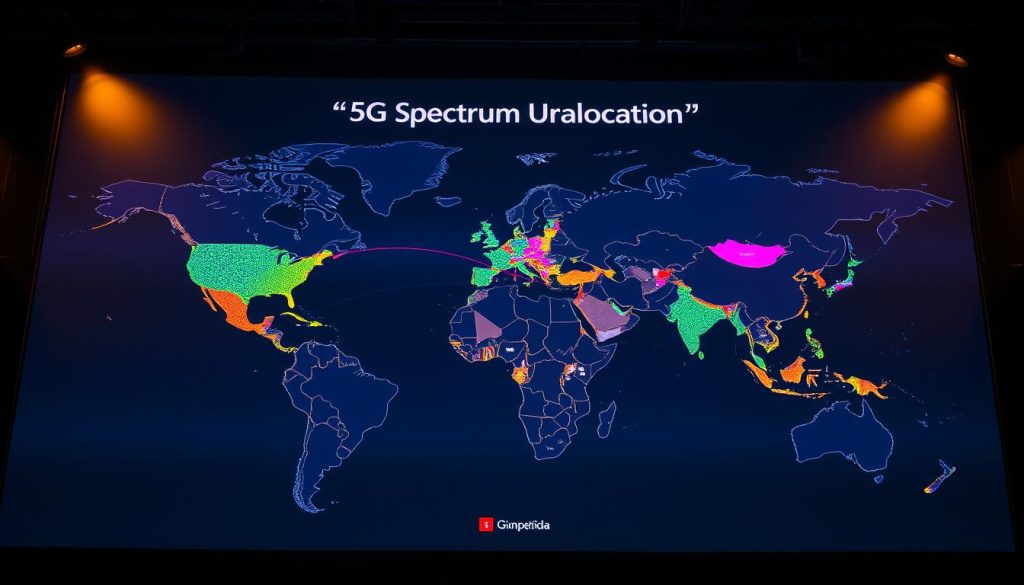
America’s spectrum auctions are like high-stakes poker games. Verizon and AT&T bet billions. China, on the other hand, gives out frequencies like hongbao red envelopes. Our analysis shows this speeds up 5G rollout by 300% compared to Western methods.
| Tactic | U.S. Approach | China’s Play |
|---|---|---|
| Infrastructure Cost | $400k per (base station) | $160k with Huawei subsidies |
| Deployment Speed | 18-24 months | 6-8 months |
| Data Sovereignty | Local storage laws | Backdoor bao (steamed buns) |
The real kicker? While U.S. telecoms fight over millimeter waves, China is exporting its 5G protocols. It’s like spreading 5G Confucianism, with mandatory checks. It’s not about global standards, but a digital tributary system.
Outcomes, Risks, What’s Next
China’s 5G rollout is more than just fast downloads. It’s changing how we live under social control. Cities like Beijing and Shanghai now have almost complete coverage. This is where the real story begins.
Imagine your air conditioner reporting your jokes to the Party committee. This is what 2024 looks like.
Surveillance States R Us
In Xinjiang, 5G cameras scan faces in 0.2 seconds. This is faster than saying “Uyghur genocide.” The 5G here has two main uses:
- Smart streetlights watch for suspicious behavior
- AI trash cans check what you throw away
- 5G doorbells check who visits your home
The social credit system is like a Black Mirror episode. Jaywalking can hurt your kid’s school chances. Criticizing the government online can make your high-speed rail tickets hard to get. It’s like Kafka meets Amazon Prime.
The Encryption Arms Race
As surveillance grows, people and tech firms fight back:
| Tool | Purpose | Success Rate |
|---|---|---|
| Quantum VPNs | Bypass Great Firewall | 63% (before detection) |
| Blockchain messaging | Untraceable comms | 42% adoption |
| AI decoy data | Flood surveillance algorithms | 78% effective |
This digital war is full of strange ironies. Huawei engineers use Western tools to protect themselves while building tools to spy on others. In Shanghai, young people share VPN tips like they’re trading punk rock cassettes.
The CCP wants to link 5G with neural interface tech by 2026. Your thoughts might soon have data plans. But history shows that every big leap forward has unexpected results. This one is connected to the grid.
Conclusion
China’s 5G rollout is changing the game, not just for traffic lights and TikTok. It’s reshaping how countries influence each other. With 576 million users by 2025, China’s 5G networks are more than just infrastructure. They connect cities and social systems in a single, powerful network.
The West is facing a tough choice. Do we follow China’s strict tech control, with Huawei leading the way? Or do we choose a more open path, where innovation can flourish freely? This choice is not just about speed. It’s about where creativity and progress thrive best.
China is playing a high-stakes game with 5G. While Western companies fight over spectrum, China’s giants are using 5G for surveillance. The real question is, what kind of game are we playing? When your subway ticket and your freedom are connected by 5G, control becomes a big issue.
Beijing is spreading its digital influence worldwide, and democracies must respond. Will we create tech systems that empower us, or mirror China’s strict controls? The choice we make could decide if 5G becomes our lifeblood or our chains.