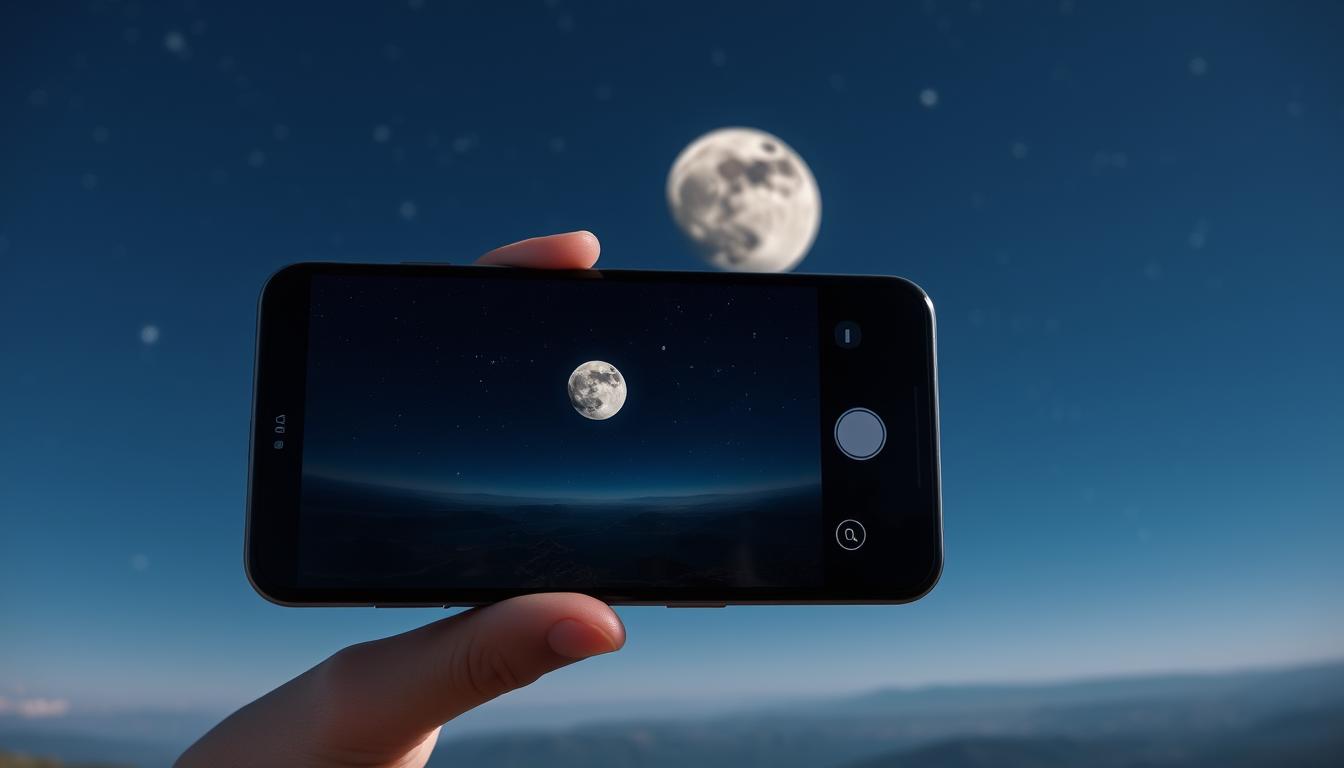
Imagine engineers gathered around photos of the moon, like modern-day alchemists. They turn code and silicon into cosmic achievements. This started as a fun feature, taking moon photos with phones. Now, it’s Asia’s new space race, without rockets.
Today, tech giants compete by capturing the moon, not just any photo. Huawei’s P60 Pro uses AI to recreate moon scenes, thanks to China’s Chang’e mission. It’s like mixing Kubrick’s effects with today’s tech.
This isn’t just about taking photos. It’s about showing off tech skills. When Vivo launched 100x zoom, they showed off their tech prowess. Each moon photo says, “Our tech is better than yours.”
The irony is, this mirrors America’s Sputnik scare. Instead of fearing red satellites, we’re amazed by red-branded tech. While NASA plans for Artemis, Shanghai labs work faster. In 2023, the moon is in your pocket.
Major Brands & Camera Advances
Imagine the Marvel Cinematic Universe as a smartphone camera showdown. Chinese tech giants are reinventing photography with big moves. They spend $14B a year on R&D (Source 1) and have over 900 imaging patents (Source 1). Let’s look at two big changes in this high-stakes game.
The Huawei-Leica Pact: More Than Red Dot Theater?
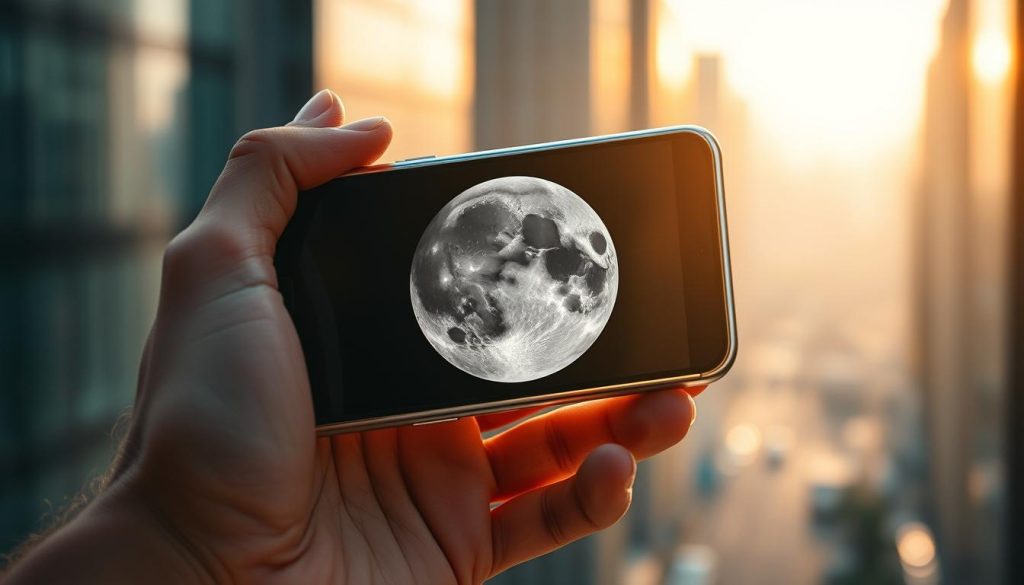
When Huawei teamed up with Leica, people thought it was just a marketing stunt. But it’s more than that. They created a multi-spectrum sensor that captures light like a vampire. Oppo responded with Periscope lenses that use submarine tech. It’s like zooming in on your neighbor’s balcony.
Xiaomi’s Night Vision: Seeing in Darker Than Batman’s Cave
Xiaomi’s night mode doesn’t just brighten shadows. It reconstructs reality with facial recognition algorithms. The results are photos so clear, owls might rethink their lives. Vivo then added gimbal stabilization, inspired by skyscraper tech. Now, your photos and your worries stay steady.
This isn’t just innovation. It’s tech espionage in disguise. And we can’t get enough of it.
Sports Event/Outdoor Photography Trends
Imagine your smartphone acting like an extreme sports prosthetic. That’s what Chinese makers are doing. No more bulky GoPros; these phones can handle freezing temperatures and track skiers like missiles. Welcome to a world where device innovation meets extreme endurance.
From Stadiums to Summits: The 5G Olympics Effect
At the Winter Games in Beijing, Oppo’s phones were the real MVP. They were freeze-proof, thanks to tech from DJI’s drones. But the biggest change was 5G’s live-stream sorcery:
- Real-time 8K broadcasts from bobsled cameras
- AI stabilization smoother than a Zamboni’s ice resurfacing
- Zoom capabilities rivaling paparazzi lenses at a Kardashian wedding
Honor went further with AI motion freeze, originally for tracking missiles. Now, it captures Shaun White’s spins with precision. No more blurry action shots; you get every detail.
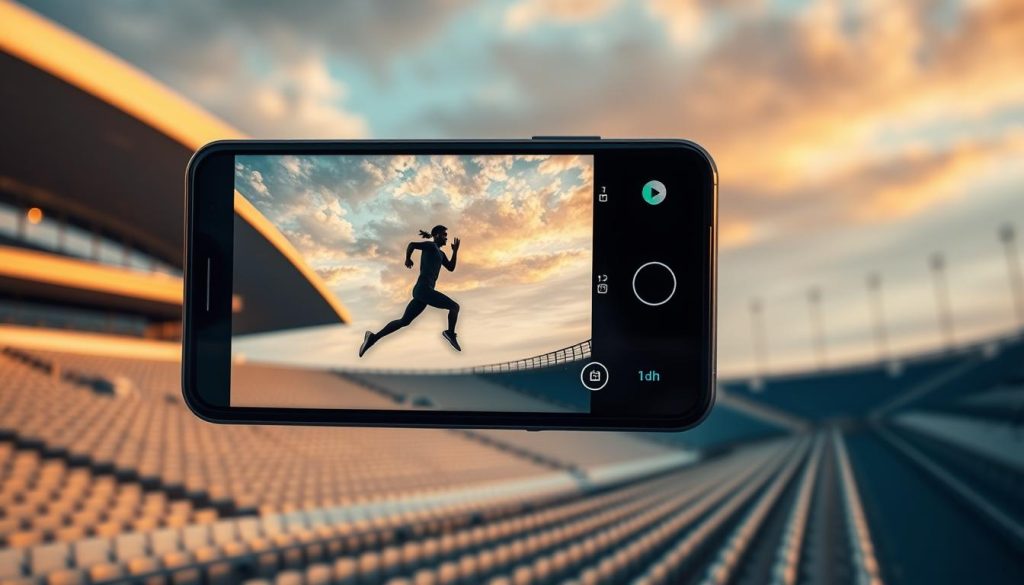
Chinese brands are using lunar tech for your hikes. Xiaomi’s terrain mapping uses moon mission algorithms. It warns about steep slopes, just like Neil Armstrong’s team.
The device innovation doesn’t stop there:
- Atmospheric pressure sensors detecting weather shifts faster than a Boy Scout’s neck hair
- AI color grading that makes forest trails look like Wes Anderson film sets
- Battery optimization mimicking astronaut sleep cycles for multiday treks
Next time your phone warns of altitude, remember: it’s been tested on the moon. Take that, Everest selfies.
Is It Marketing or Science?
Let’s get real: when your phone says it captures lunar craters like a pro, is it magic or science? The moon photo China thing is more than just about how it looks. It’s a battle between what’s real and what’s not.
MoonGate 2023: When AI Enhancement Crosses Reality
Do you remember that viral photo of the “super blood wolf moon” taken on a subway? Experts found it was mostly AI-made. Now, brands use lunar data like digital brushes to add details your camera missed. It’s like a fake Venice in Vegas.
Your brain does something similar. It fills in gaps with what it thinks is real, just like your phone’s night mode adds fake starlight. Is that dishonest, or just how we see the world?
Sensor Size vs. Software Sorcery: The Megapixel Mirage
Let’s look at the specs war:
| Component | Hardware Reality | AI Magic |
|---|---|---|
| Lens Aperture | f/1.8 (decent low-light) | Simulates f/1.2 bokeh |
| Sensor Resolution | 48MP (cropped) | AI upscales to 200MP |
| Moon Texture | Blurry gray blob | Uses Chang’e-5 geological data |
That “200MP masterpiece” in your gallery? It’s like a vegan substitute for filet mignon. It looks good until you know the truth. Yet, smartphone cameras can beat $10,000 DSLRs in some cases. Does it matter if it looks real?
As we learned from facial recognition issues, truth in tech is hard to find. Your moon shot might be 30% real, 50% AI, and 20% marketing. But when you post it on Instagram with #LunarSelfie, does anyone question it? Maybe we’re all part of this digital show.
User/Pro Reviews & Results
In the smartphone world, there’s no in-between. It’s all about the hype or the facts. Welcome to a time where brand rivalry goes beyond just specs. It’s a clash of influencer excitement and scientific proof.
Influencer Armies vs. Lab Coats: The Benchmark Wars
Imagine a tech YouTuber raving about a camera shot that looks like a dream. DXOMARK, on the other hand, says the photo has “more noise than a Nickelback concert.” Today, cameras face two kinds of critics:
- Influencer metrics: They look for cool filters, Instagram-worthy shots, and fancy designs.
- Lab benchmarks: They check for color accuracy and dynamic range, like NASA.
The 200MP sensor is a big deal, but lab tests show it’s not perfect. Real photos can look like they’ve been over-sharpened. Influencers, though, love the “studio-quality portraits” they get.
Thermal Throttling: When Phones Overheat Like Nuclear Reactors
Device innovation has a dark side. Your phone’s 8K video recording power is like a nuclear reactor. That’s why some phones have cooling systems from gaming PCs.
- Minute 1: It feels like a DSLR.
- Minute 3: It starts dropping frames.
- Minute 5: The battery drains fast.
And then there’s “AI color grading.” It makes sunset photos look like they belong in a Tim Burton movie. It’s like the phones are trying to direct a remake.
When Pajama Astronauts Outsmart Hubble
The smartphone camera race is like China’s 5G sprint for tech dominance. Brands like Huawei and Xiaomi didn’t just add moon filters. They turned our phones into mini space stations, making midnight snacks feel like space missions.
This tech battle asks big questions. Why send rockets when your phone can edit photos like NASA? China’s brands used AI to achieve what NASA took years to do. Now, we get top-notch telescope views from our couches.
But there’s a deeper question here. When Huawei’s AI makes moon photos from blurry shots, are we seeing reality or creating it? Tech critics and scientists are like Marvel heroes and Starfleet engineers, debating what’s real and what’s not.
The real frontier is now about truth and fiction in photos. China’s tech giants keep pushing the limits. We must ask: Does winning in night photography matter if our photos are AI-made? The answer could decide if our photos are memories or fantasies.
Sun Tzu said the best victory is when you win without fighting. Xiaomi just launched a 200MP sensor. Game over.