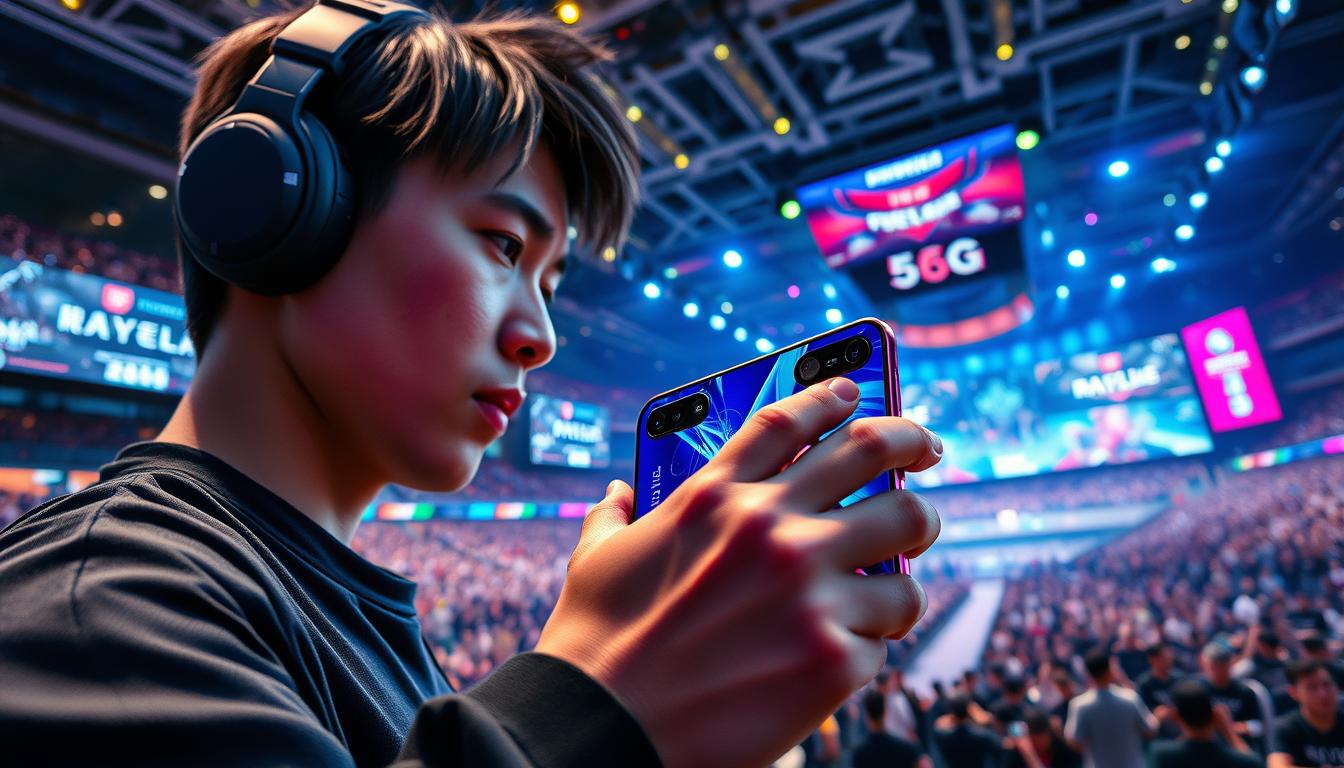
Imagine a Beijing stadium as loud as Times Square on New Year’s Eve. But instead of fireworks, fans cheer for perfect shots in games. China’s mobile gaming revolution is changing screens and geopolitics with silicon and signal bars.
While Westerners fight over console wars, China’s handheld devices are smoother. Tencent’s Honor of Kings makes more money than Belize’s whole economy, Olympic Committee data shows. This isn’t just for teens; it’s China’s digital soft power.
Latency is key now because 260 million users flood mobile arenas. Every millisecond counts. The International Olympic Committee recognized esports in 2017, the same year China’s gaming industry hit $6 billion. That’s no coincidence.
These phones are more than devices; they’re cultural forces. As Gen Z loses interest in traditional sports, mobile games fill stadiums. Today’s athletes use touchscreens, not rackets. The stakes are much higher than loot boxes.
Mobile Gaming Hardware Explainer
What do mahjong parlors and mobile gaming have in common? Both need precision cooling systems to avoid overheating. In China, gaming hardware engineers focus on thermal physics, not just specs like ray tracing. They use vapor chambers, thinner than a dumpling wrapper, to cool down Snapdragon processors.
Shenzhen’s Huaqiangbei market is a marvel. You’ll find components that impress even NASA engineers. It’s not just about power – it’s about APM (actions per minute) engineering. China’s mobile gaming edge comes from three key elements:
- Liquid cooling using aerospace-grade materials
- Battery tech for 8-hour PUBG marathons
- Touchscreens with 720Hz sampling rates (faster than your fingers)
Tencent’s labs are where the magic happens. Their R&D teams optimize every detail, like Starcraft pros. This results in devices like those from Honor outselling Nintendo Switch in Vietnam and Thailand. Why buy a console when your phone can run Genshin Impact at 60fps and charge in 17 minutes?
This hardware revolution is changing the game and global tech economics. Chinese factories produce tiny cooling fans, while Western companies struggle with basic phone ventilation. Next time your phone overheats, remember: the solution might be from Shenzhen, between counterfeit AirPod stalls and bubble tea stands.
Nubia and the 144Hz Revolution
Imagine a smartphone screen as fast as triple espresso shots. That’s what Nubia’s Red Magic series is like with its 144Hz refresh rate. Most phones stick to 60Hz, but these devices are like caffeinated hummingbirds in a Honor of Kings tournament. But, if your phone’s thermal system sounds like a kazoo orchestra, it’s not worth it.
A 144Hz refresh rate is 2.4x faster than standard screens. This is key for fast gaming, where a split-second dodge can win a $2M prize. But, does it really make a difference? Pro gamers say it’s like debating Ferrari vs. Lamborghini acceleration during a grocery run.
The real magic is Nubia’s frame interpolation tech. It smooths out motion like a Hollywood CGI team working overtime.
Now, let’s talk about thermal management. The Red Magic’s cooling fans are loud, like a “miniature People’s Liberation Army marching band” during intense sessions. While others throttle performance to avoid overheating, Nubia keeps it steady. Here’s how it compares in real combat:
- 0.3ms touch response – faster than human neural transmission
- 4D shock triggers mimicking console controller vibrations
- RGB lighting that could guide planes to land during fog
Want to try this out? The Red Magic series turns mobile gaming into a contact sport. But, be warned – that silky 144Hz smoothness might make you hate slower devices.
Sports Gaming Performance: Real-World Impact
A Shanghai teenager made over $1 million playing PUBG Mobile. This shows how mobile eSports has changed from a hobby to a big deal. It’s not just about playing games; it’s a serious sport.
Internet cafes in rural areas are now talent factories. Alibaba even offers eSports tourism packages. These include meeting pro players and more.
| Platform | Revenue Stream | Cultural Footprint | Gen Z Appeal |
|---|---|---|---|
| Tencent’s Arena of Valor | $2B+ annual in-app purchases | National tournaments in stadiums | CCP-approved “healthy gaming” branding |
| Riot’s Wild Rift | Western sponsor partnerships | Twitch-centric viewership | Counterculture cachet |
| NetEase’s Identity V | Cosplay merchandise boom | Anime crossover events | Niche horror gaming community |
In third-tier cities, internet cafes are now hubs for gaming. They offer “pro-gamer breakfast specials”. Local governments even support top teams, seeing them as future stars.
Alibaba is now into eSports tourism. They offer packages with:
- Stadium VIP tickets
- Streamer masterclasses
- Custom smartphone cooling accessories
But is gaming really a better career than a regular job? State media says yes, calling it a way to build socialist values.
Competition: Xiaomi, Vivo & Others
China’s gaming phone scene is like Silicon Valley’s startup battle, but with more RGB lights. Nubia focuses on refresh rates, while Xiaomi’s Black Shark and Vivo’s iQOO compete in a thermally conductive battle. They use liquid cooling systems that could keep a woolly mammoth cool, and their Antutu scores are higher than Shanghai’s tallest skyscrapers.

| Brand | Secret Sauce | Antutu V10 Score | Market Chess Move |
|---|---|---|---|
| Xiaomi Black Shark 6 Pro | Magnetic pop-up triggers | 1,650,000 | Pre-installed Game Turbo app store |
| Vivo iQOO 11S | Dual X-axis motors | 1,630,000 | WeChat mini-game integrations |
| Red Magic 8S Pro | 20,000 RPM fan | 1,700,000 | AliExpress gaming bundle deals |
Behind these specs is a geopolitical subplot. When Washington blocked Huawei’s chip supply, rivals made more deals with Qualcomm. Now, phones benchmark like overclocked PCs while spreading China’s app ecosystem. This includes mobile payment platforms and ”cultural experience” game hubs.
Xiaomi is now selling Black Shark devices in Nigeria with African folklore games. Vivo is responding with Ramadan-themed Fortnite skins in Indonesia. It’s not just about the hardware; it’s soft power through polygon counts.
But the real winner might be TSMC. Every Snapdragon 8 Gen 2 chip in these phones helps in the semiconductor détente between Chinese brands and global tech. The lesson? In mobile gaming’s arena, even thermal paste has diplomatic value.
The Consumer’s Verdict
China’s mobile gaming isn’t just about speed – it’s about monthly rice budgets sacrificed for virtual characters. A Shenzhen factory worker spends ¥3,000 on Genshin Impact’s latest skin. This is more than entertainment; it’s economic alchemy where digital items are more valuable than real needs.
Esports academies show another side of this trend. Last quarter, they rejected 98% of applicants. This is even stricter than Harvard’s admissions. With 1.4 billion people and 5G smartphones, it’s a generation risking their youth for virtual victories.
Douyin’s influencer army adds to the mix. They mix Fortnite gameplay with CCP-approved comments. They avoid talking about “addiction” and “gambling” while celebrating esports careers.
- Praising game mechanics without mentioning “addiction”
- Showcasing loot boxes while avoiding “gambling” terminology
- Celebrating esports careers without acknowledging dropout rates
One streamer said, “My Huawei Mate 60 Pro isn’t just a phone – it’s my ticket from Foxconn’s assembly line to Tencent’s Arenas.” The irony? His ¥9,000 device likely came from the same Foxconn line.
Consumers see the paradox. Xiaomi’s survey found 68% of gamers regret buying premium phones within six months. Yet, download speeds and frame rates keep getting better. China’s mobile GDP grows 23% each year. Everyone’s in a game of digital one-upmanship, chasing after something that might not even exist.
The Next Wave: Accessories, Apps, & Sports
China’s gaming scene is changing fast. Imagine watching the Chengdu Hunters win a sports tournament through Huawei AR glasses. These glasses show real-time stats, like a cyborg’s HUD.
Your AI coach, like a digital Confucius, checks if you’re stressed or just playing badly. This isn’t fantasy; it’s everyday life in Guangdong Province.
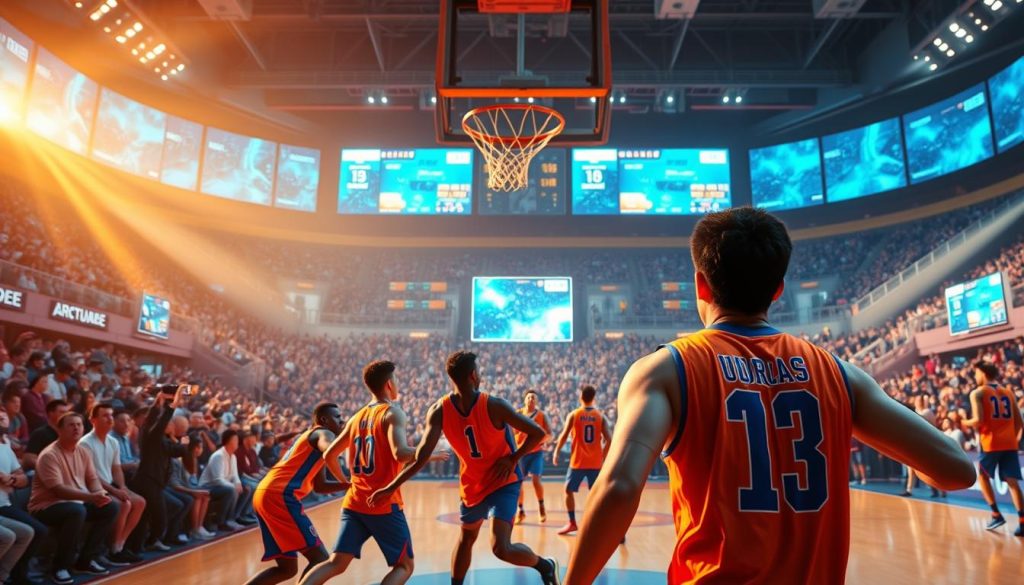
Mobile gaming is getting even more exciting. Accessories are becoming symbols of status. Tencent Points can buy cool virtual items and tickets to games.
Why wait for stadium snacks when you can have them in AR? Mobile cooling fans are now trendy, with Supreme collabs and RGB lights.
The real challenge is hosting the first Electronic Sports Asian Games. Provinces are racing to build sports tournament venues. Sichuan’s arena will have:
- 5G-powered holographic stages with Xi Jinping quotes
- AI referees trained on esports and The Little Red Book
- WeChat Pay kiosks for digital merch and hotpot deliveries
| Trend | Tech Used | Province Leading | Projected Launch |
|---|---|---|---|
| AR Spectating | Huawei Glasses 3.0 | Guangdong | Q3 2026 |
| AI Coaching | Tencent DeepQ | Zhejiang | 2027 |
| Digital Currency | Digital Yuan Integration | Beijing | 2025 |
| Fashion Tech | Xiaomi Wearable Coolers | Sichuan | 2028 |
This isn’t just about gaming; it’s a way to show power. Your phone becomes a Sports Illustrated cover star. Your headset streams games approved by the government.
The future winner will be those who make loyalty programs feel special, not like surveillance.
Conclusion
China’s gaming phone race is far beyond Fortnite. Nubia and Xiaomi have introduced 144Hz displays and liquid cooling. These aren’t just features; they’re strategic moves in a global game.
Every frame on a Red Magic 9 Pro shows off 5G tech that’s almost magical. It can stream 8K video without any lag. Even grandma’s Mahjong app is now a tool for soft power.
Vivo and Tencent are teaming up in Southeast Asia, making esports diplomacy smooth. Indonesian teens now look up to Chinese gamers more than Hollywood stars. This shows how the Belt and Road Initiative is spreading its influence.
Beijing is using RGB-lit controllers and pandas to win hearts. But there’s a deeper question. Does mastering mobile gaming make a nation the player or the played?
Those fancy phones hide more than just chips. They’re changing global youth culture. Maybe the gaming time limits are about more than just eye health.
When you quit a game on a Lenovo Legion, remember it’s more than just fun. You’re helping China test its digital dominance plan. The real challenge is a world where every game move helps someone’s strategy. So, keep playing, but watch the global scoreboard too.