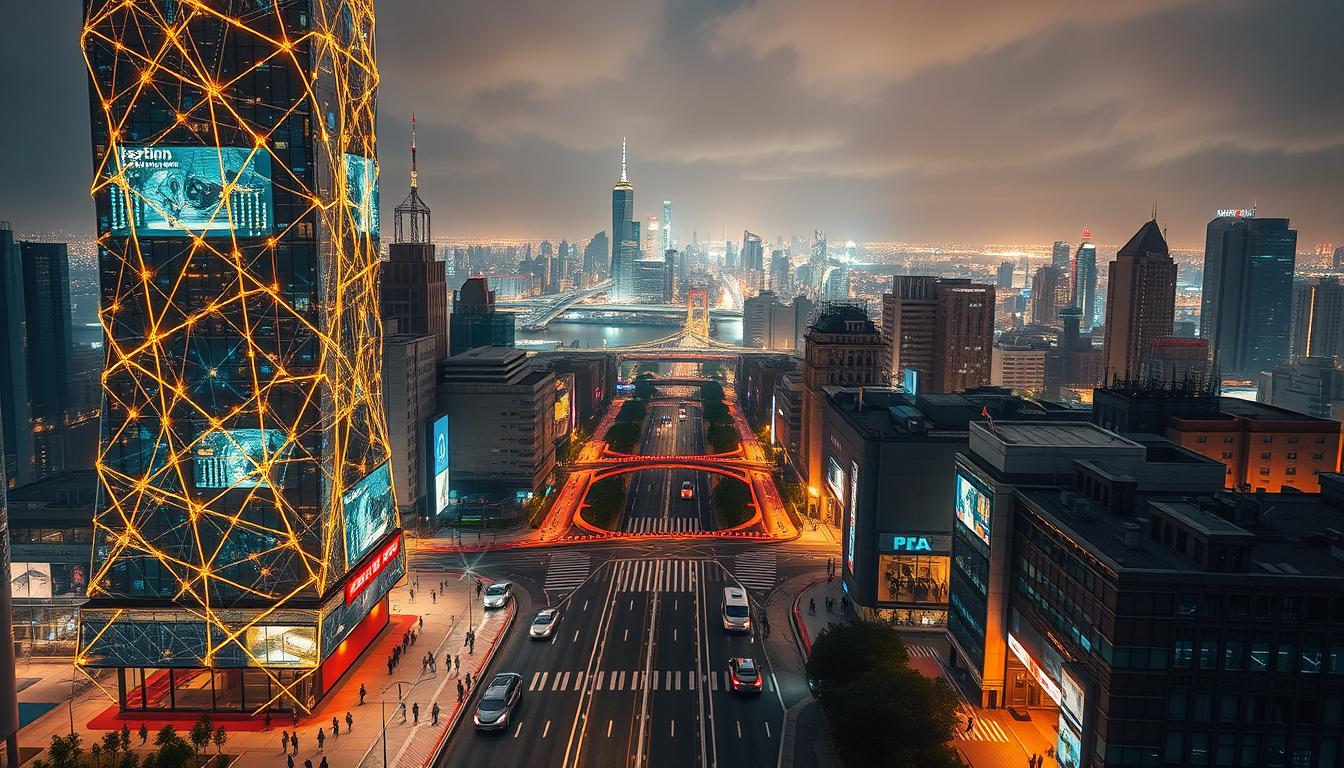
Imagine traffic lights that salute ambulances like royalty. Intersections that change faster than LeBron James plans a play. Hangzhou is where this magic happens, changing urban life and sports.
China’s City Brain system doesn’t just process data – it eats chaos for breakfast. Last spring, I saw an ambulance speed through traffic. Every red light turned green, cutting response times by 50%.
The stats are impressive: 15% faster commutes and smart intersections. But the real magic is turning chaos into order.
It’s like Moneyball for city planning. Machine learning now makes decisions, not just traffic cops. Xiaoshan District’s smart roads even predict when drivers will get impatient.
While American cities face challenges, China is embracing AI. The question is, are we ready to let AI manage our cities?
What is City Brain?
Imagine a system that makes your smartphone’s autocorrect look like a toddler guessing crayon colors. China’s AI governance crown jewel isn’t just about traffic lights. It’s the overachieving valedictorian of urban management, crunching more data daily than all of Wikipedia’s edits.
The Digital Nervous System of Modern Cities
This govtech marvel is powered by platforms like MaxCompute. It processes exabytes of data – enough to binge-stream every cat video ever made… twice. It’s like a hyper-caffeinated puppetmaster pulling strings from sewer sensors to stadium turnstiles.
Hangzhou’s emergency crews now arrive faster than a Beijing subway shover at rush hour, thanks to 92% accident detection accuracy. The system doesn’t just react – it predicts. Like a chess grandmaster three moves ahead, it balances everything from streetlight timing to crowd control during midnight dumpling festivals.
Forget “smart cities.” This is urban management on Red Bull, rewriting the rules of how 21st-century metropolises breathe, think, and occasionally argue with traffic drones. Your city’s parking app? That’s cute.
AI and Urban Management: Case Studies
Let’s dive into the real world of urban tech. It’s not just about fancy terms. It’s about making cities run smoothly. Imagine cities where buses and ambulances move like clockwork, and people smile during rush hour.
From Traffic Tangles to Emergency Responses
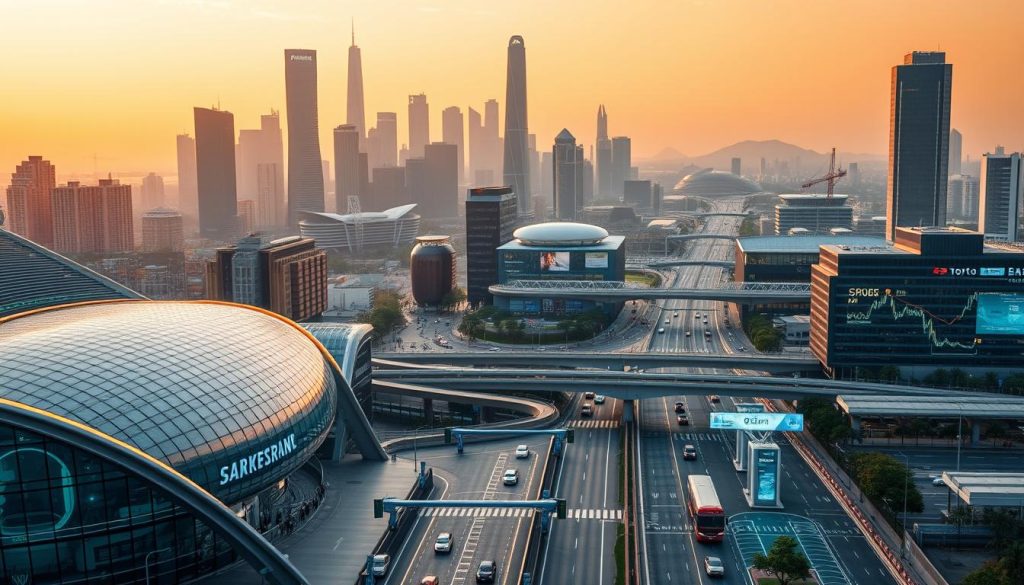
In Suzhou, buses got 17% more riders by predicting demand accurately. Hangzhou, once very congested, now sees ambulances arrive 7 minutes faster. This is a huge difference, like getting help in seconds.
The key is using algorithms to manage traffic like a game. Beijing’s 2010 traffic disaster could have been avoided with today’s tech. It’s not just about moving cars; it’s about making cities better.
Think of it as urban tech miracles that improve life. It’s like having Olympic-level sports infrastructure, but for your daily commute and emergency services.
Smart Sports Venues and Data-Driven Fitness
Imagine your sneakers telling on your lazy lunges and stadium cameras watching your snack choices. We’ve entered a new era where data-driven fitness goes beyond personal trackers. Now, entire arenas act like hyper-vigilant coaches.
Picture your workout being analyzed as precisely as a NASA launch. It’s like having your mother-in-law watching your every move.
The Stadium That Watches Back
Modern venues now use wearable tech and crowd flow analytics. It’s like Disney’s MagicBand meets Minority Report. Those “smart” drink cups? They track your drink intake and crowd patterns like Wall Street.
It’s both convenient innovation and surveillance capitalism’s latest move. Let’s call it both.
This tech could make Taylor Swift’s Eras Tour logistics look easy. Real-time heat mapping finds crowded spots fast. Wearable data adjusts air flow when everyone’s heart rate goes up.
Now, “home field advantage” gets a Silicon Valley twist.
But, it’s not all good. When your Fitbit teams up with stadium AI, who owns your data? Could ads for knee braces pop up before you feel any pain? The future of data-driven fitness is about more than just better workouts. It’s about privacy debates in sweat-wicking fabric.
Public Safety, Traffic & Major Events
Imagine an invisible conductor controlling ambulance sirens, traffic, and crowds like a maestro. That’s what public safety AI does today. It’s not like Skynet; it’s more like a smart city therapist.
When Algorithms Direct the Urban Orchestra
In Hangzhou, there are 128 smart intersections. They’re not just lights; they help ambulances get to you faster than pizza. In Kuala Lumpur, during the rainy season, traffic jams dropped by 48%.
At big events, AI takes over crowd control like a pro. It’s like having a magic solution for stadium crowds. The tech is so good, you’ll forget cities used to guess where to put things.
This isn’t about replacing people. It’s about making cities smarter. Your commute will avoid accidents before you even see them. It’s like having a superpower for your daily drive.
Challenges and Privacy Debates
Imagine a world where streetlights track your parking better than you do. Where “gotcha” cameras fine you before you’ve even walked. Welcome to the 21st-century urban paradox: cities so efficient, they feel like middle-school hall monitors.
Recent systems can spot vehicles with 90% accuracy. It’s like living in a Black Mirror episode where benefits come with a price. Do we need machines to remember where we parked or protested?
The Surveillance Capitalism Conundrum
Critics say these tools create a digital panopticon, turning sidewalks into data farms. Shenzhen’s jaywalking fines are so precise, they can spot a gum wrapper in mid-air. As privacy debates in urban tech grow, European cities face big questions about their sensors.
These systems work. Traffic and littering rates drop. But what’s the cost? When trash cans know your snack choices, where’s the line between public safety and personal sovereignty? The answer could shape our cities into utopias or polite dystopias.
Global Export Poteial
Move over, Marco Polo – there’s a new silk road in town, and it’s paved with algorithms. While Tesla’s Full Self-Driving tech struggles with left turns, China’s “Algorithm and Node” initiative is quietly rewiring urban landscapes. It spans from Kuala Lumpur to Shanghai. But can this digital diplomacy avoid becoming a geopolitical lightning rod?
Shanghai’s experimental development zone recently exported its traffic management system to Malaysia. This move is like a Trojan horse with better PR. Kuala Lumpur’s morning commute now runs smoother than a TikTok algorithm, but at what cost? “City Brain” solutions promise efficiency, yet raise questions about data sovereignty in 119 languages.
Chinese firms aren’t just undercutting Western prices – they’re rewriting the rulebook. While Meta’s Llama4 stumbles through twelve languages, Eastern models chat up local dialects like street vendors. Africa’s 19,000 tech startups didn’t sign up for neocolonialism 2.0, but will they refuse infrastructure that outpaces American offerings by 40%?
The real magic happens where silicon meets strategy. As U.S. giants hoard advanced chips, China’s playing chess with cloud infrastructure. They’re deploying global AI solutions faster than you can say “data colonialism.” The question isn’t whether this tech works, but who’s holding the off switch when it does.
When Algorithms Outthink City Hall
Alibaba’s City Brain is changing Chinese cities and setting a new standard for urban tech. By 2030, China’s AI market will reach 1 trillion RMB. We’ll see traffic lights talking to drones and stadium seats knowing what snacks to sell before halftime.
These systems will start to think ahead, like a chess master. They’ll predict and solve problems before they happen.
But every new tech brings its own challenges. Huawei’s smart cameras and Tencent’s data platforms make cities share information. But who controls this flow of data?
Western cities are also exploring these systems, like Google Sidewalk Labs. We’re all part of a big experiment. The big question is: Can AI make cities better without making us feel watched all the time?
Urban planners are now making choices that seem straight out of Black Mirror. They’re deciding if algorithms should control subway schedules with Didi data. Or if police drones should use WeChat to track people.
In Hangzhou, traffic has improved 15% thanks to City Brain. But what if your walk to lunch is seen as suspicious by a server farm?
The urban tech race is not just about making cities smarter. It’s about who decides what “smart” means. Alibaba is now exporting its tech to Kuala Lumpur and Moscow, challenging Silicon Valley.
Tomorrow’s cities will have brains and opinions. But will we agree with them? That’s where the real planning starts.