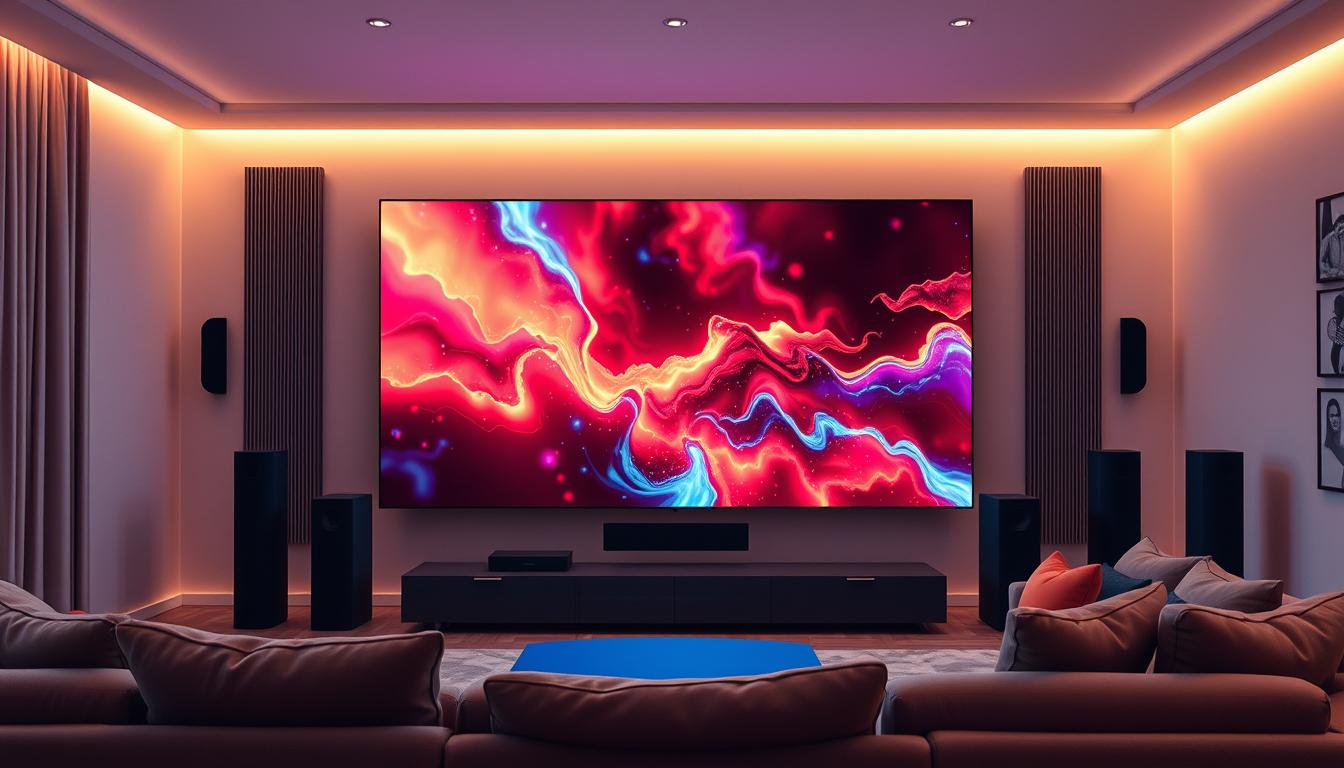
Remember when a 65-inch TV was revolutionary? Now, it’s small compared to today’s TVs. We’ve moved from John Logie Baird’s 1924 mechanical TV to Samsung’s Wall display. This change shows how fast tech is advancing.
TCL’s 115-inch TV at CES 2024 is a huge leap. It’s thinner than our patience for slow internet. We’re aiming for cinema-scale immersion in our homes. But, our attention spans are getting shorter.
This isn’t just about TV size. It’s about our culture. The old TV era was like The Matrix’s dial-up days. The wars over plasma and LCD TVs were like Westeros drama. Now, our TVs change like liquid metal, making old TVs seem outdated.
So, why do we want bigger TVs? Maybe we’re trying to make up for smaller social circles. Or maybe bigger TVs just offer better escapes. Either way, your next TV might need its own ZIP code.
Home Viewing and the Shape of Entertainment
Remember when TVs were furniture? The 1950s console that once dominated living rooms has evolved. Now, we have giant screens that serve as both entertainment and wall art. This change has quietly transformed American homes and maybe even how we connect with each other.
Netflix’s push for 4K has turned suburban homes into mini-cinemas. This has sparked debates as intense as Succession season finales.
The move from old TV shapes to wider screens has changed how we watch shows like The Crown. It has also reshaped our living spaces. That 85-inch TCL Gallery series is now more than just a TV; it’s a statement piece, rivaling fireplaces and open kitchens.
Now, planning your home for home entertainment is like planning a city. It requires careful thought and space planning.
Consider these modern absurdities:
- Bezel sizes shrinking faster than polar ice caps
- Streaming bitrates dictating furniture placement
- “Art frame” displays pretending to be Rothko knockoffs
TCL’s Gallery series shows how TVs have become part of our decor. They can display art like Van Gogh’s Starry Night one minute and Stranger Things the next. It’s a mix of art and entertainment, leaving us wondering what we’re really doing.
The irony is that while our screens get bigger, our attention gets shorter. Those thin bezels we love? They’re like the fancy cousin of the smartphone notch, showing off our tech status.
New Use Cases for Sports Fans, Families, and Parties
Let’s talk about America’s real national pastime: arguing over screen sizes during championship games. The modern living room has become a battleground where pixel density and beer consumption wage silent war. CNET’s infamous 229-pound TV wrestling match isn’t just tech journalism—it’s cultural anthropology for the streaming age.
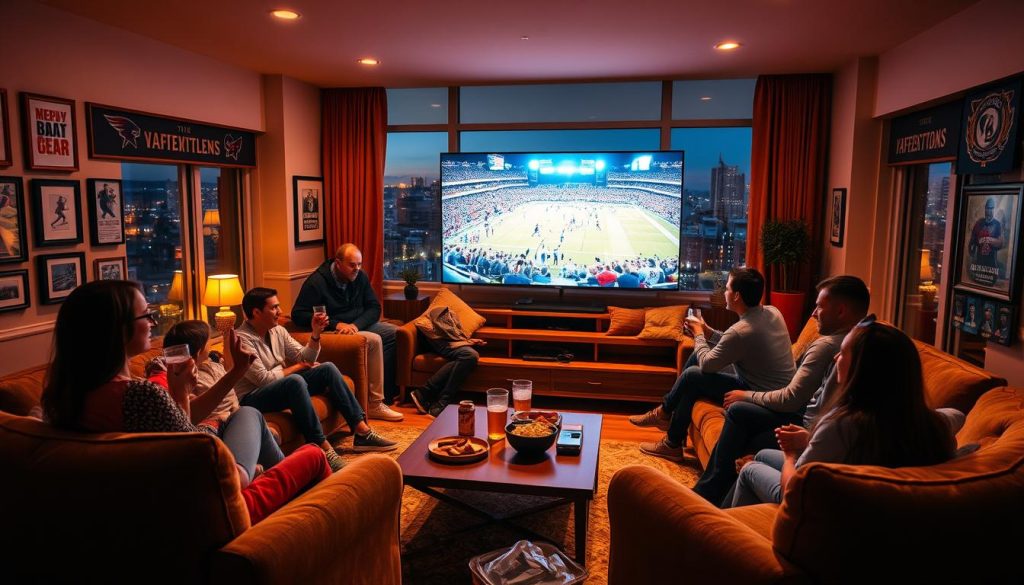
Consider the Super Bowl party math: 85-inch screen ÷ 12 guests = 7.08 inches of glory per person. But does 8K resolution matter when your cousin’s nacho cheese incident becomes the main attraction? The magic happens when screen size and social dynamics collide. Bigger displays don’t just show games—they create shared experiences where every jump shot and fumble becomes collective theater.
March Madness reveals our true screen priorities. Office pools thrive on communal FOMO—that desperate need to see Cinderella stories unfold in real time. A 100-inch display turns bracket-busting upsets into cultural moments, proving size impacts emotional investment more than pure resolution ever could.
The Screen Size Sweet Spot for Different Events
| Event Type | Ideal Screen Size | Social Fuel | Resolution Reality Check |
|---|---|---|---|
| Super Bowl Party | 85″+ | Wings & Beer | 4K > 8K (tears blur pixels) |
| Family Movie Night | 75″ | Popcorn & Nostalgia | HDR > Raw Size |
| NBA Finals Watch Party | 100″+ | Craft Cocktails | Motion Rate > Pixel Count |
This isn’t just about specs—it’s about human behavior. As sports tech evolves, the best group viewing experiences balance technical prowess with social calculus. Your TV’s peak brightness matters less than its ability to make fifteen people gasp simultaneously at an overtime buzzer-beater.
The true test? When your screen becomes the gravitational center of the room. Not just where eyes go, but where memories form. That’s the unquantifiable magic no spec sheet captures—but every great watch party demands.
Content Ecosystem Integration
Choosing a streaming platform in 2024 is like picking a high school clique. You can join Roku’s big party or Huawei’s HarmonyOS group. The Huawei group is like the exchange students who bring their own food.
Roku offers a wide range of apps, welcoming everyone. But Huawei’s smart device ecosystem is more complex. HarmonyOS connects your devices in a way that’s both smart and a bit spooky.
| Platform | Party Vibe | Secret Weapon |
|---|---|---|
| Roku | Friday night blockbuster crowd | Universal remote compatibility |
| HarmonyOS | MIT hackathon winners | Cross-device AI choreography |
Samsung’s Frame TV is like the art kid in school. It has a “living artwork” mode that judges your home decor. It knows if your throw pillows don’t match.
This competition shows a truth about tech giants’ ecosystem strategies. Today, screens are more than just displays. They’re like the hosts of Westworld, judging your choices.
The big question is: Will these ecosystems grow up and become real partners? Or will choosing a platform always feel like joining a clique with judgmental appliances?
Brand Differentiation
In the world of living room tech, TV makers are in a fierce battle. TCL uses a smart strategy: making TVs affordable like IKEA makes furniture. Samsung, on the other hand, has its “The Wall” microLED display, a high-end showstopper.

When your neighbor talks about their TV’s 5,184 dimming zones, it’s like showing off a pixel-counting parlor trick. But the real fight is about nits. These candela-per-square-meter measurements are the big deal in 2024, even if we can’t see them.
| Brand | Dimming Zones | Peak Brightness (nits) | Price Positioning |
|---|---|---|---|
| TCL 6-Series | 1,200 | 1,500 | Budget Baller |
| Samsung QN900C | 5,184 | 4,000 | Luxury Yacht |
| LG G3 OLED | Pixel-level | 2,100 | Mid-Range Maverick |
This isn’t just brand differentiation—it’s a crisis of identity. TCL wins over those who want value, while Samsung goes for the high-end. But here’s the catch: 95% of viewers can’t tell the difference between 1,500 and 4,000 nits. So why the competition? It’s all about bragging rights in the streaming age.
The lesson? TV innovation is like smartphone marketing: create problems to sell fixes. But at least our Netflix shows look great while we’re being sold more.
Who Needs a Bigger Screen?
Your living room isn’t Tinder, but picking the wrong screen size can be costly. Choosing a giant screen isn’t about keeping up with others. It’s about physics and a bit of psychology. Avoid becoming the CNET journalist who bought too big.
- 9ft couch distance = 75″ screen (the “Netflix & Chill” sweet spot)
- 12ft open-concept loft = 85″-100″ (for flexing your 4K resolution during Zoom meetings)
- Anything beyond 15ft = Projector territory (or couples therapy)
The CNET story about the freight elevator? It’s a cautionary tale about measuring twice. Your doorway width is more important than your credit limit. Subtract 2″ from your maximum size. Your eyes and partner will appreciate it.
Now, the truth psychologists won’t share: screen size anxiety is real. Seeing your neighbor’s 85″ OLED can make your 65″ seem small. But before buying big, ask yourself: Are you improving home entertainment, or covering up a midlife crisis?
The ideal screen size depends on your viewing habits:
- Sports addicts: Focus on refresh rates over size
- Cinephiles: Go big, but measure your hallway first
- Casual streamers: 65″-75″ is perfect to avoid squinting and financial strain
Your screen size should enhance your space, not compete with it. Unless you’re hosting Super Bowl parties for 40, then go for IMAX and let the neighbors know you’re cheering.
Conclusion
Grandma’s old TV was once a secret escape. Now, our big screens bring people together like campfires. We’ve moved from hiding screens to making them the heart of our homes.
Brands like LG and Sony create amazing visuals and sounds. They turn our living rooms into top-notch movie theaters. No need for sticky floors or cramped seats.
Sports fans love watching 8K replays on TCL’s big screens. Families enjoy Disney+ on Hisense’s panels. These screens are key for our favorite activities – from Super Bowl parties to Marvel marathons.
But, there’s talk of AR glasses and VR headsets. Will they make our big screens seem old-fashioned? Meta’s Quest Pro might change how we watch things.
But for now, screens are here to stay. They offer real experiences we can’t get from headsets. Like sharing popcorn or enjoying a paused nature documentary.
So, let’s keep our big screens as windows to connection. Whether gaming on Samsung or watching TikTok on Vizio, today’s tech brings us together. It’s our modern campfire. Just remember, Grandma was right about not sitting too close.